Monday, May 01, 2006

20060501 Solar Observation

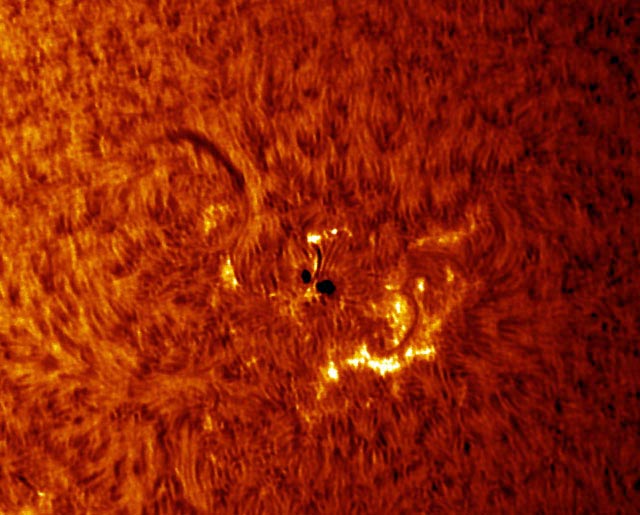
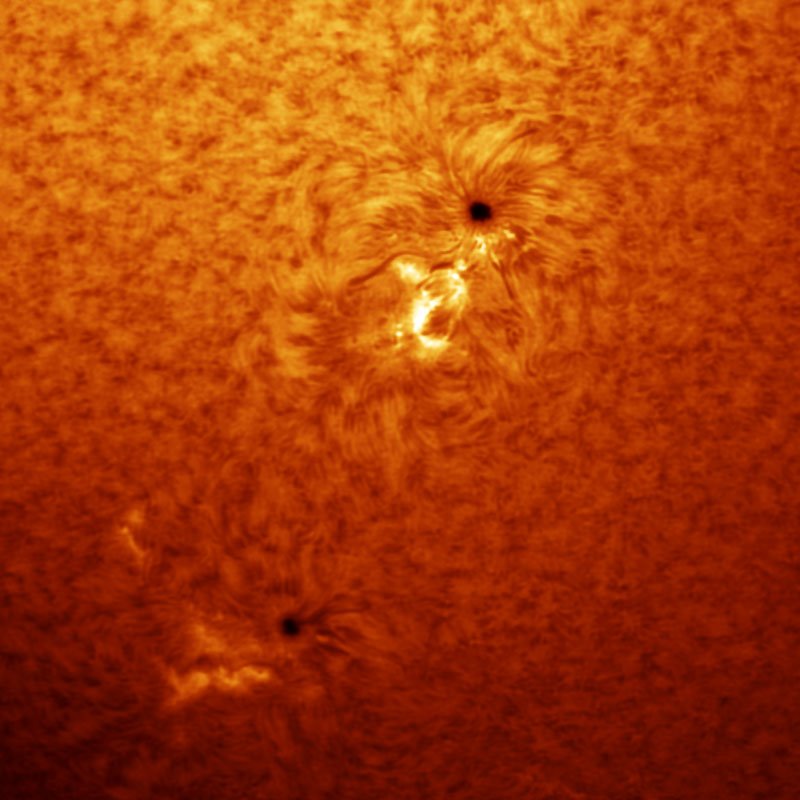
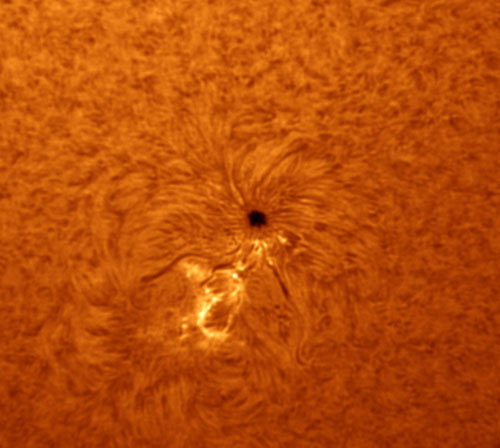
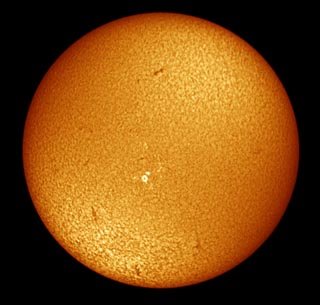
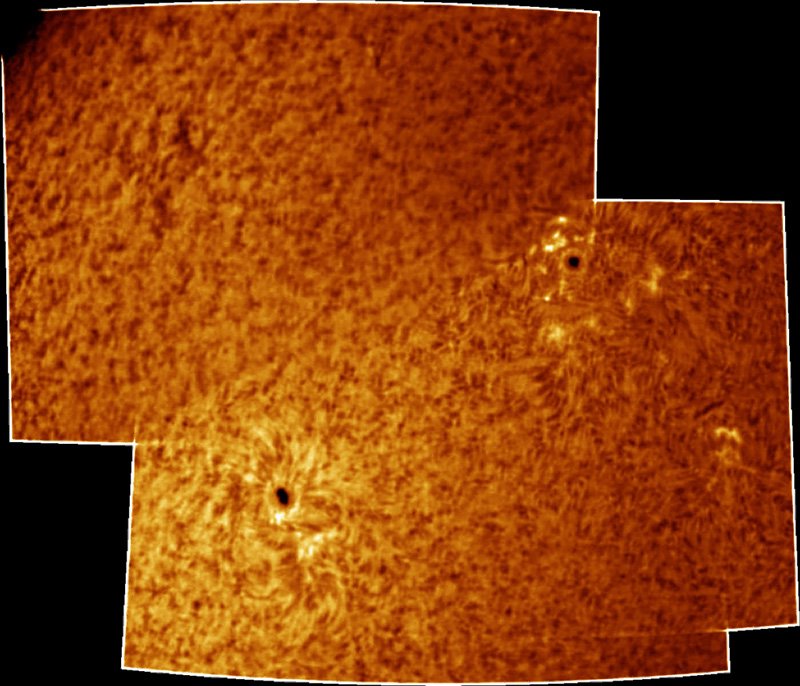
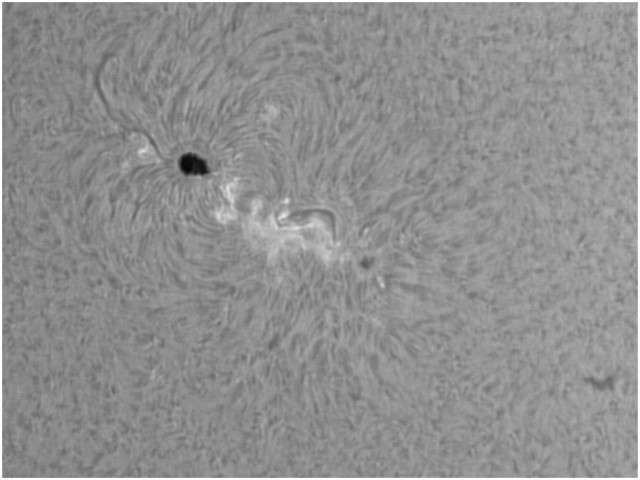
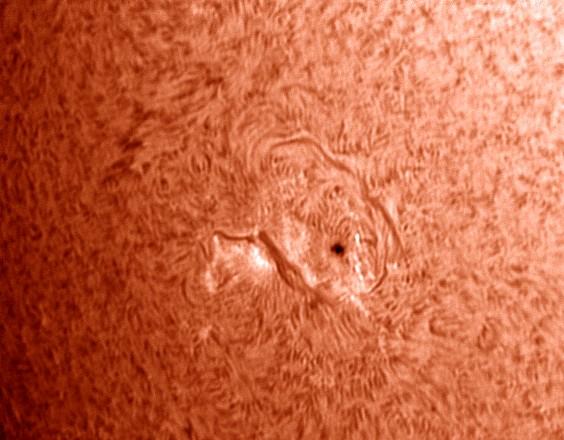
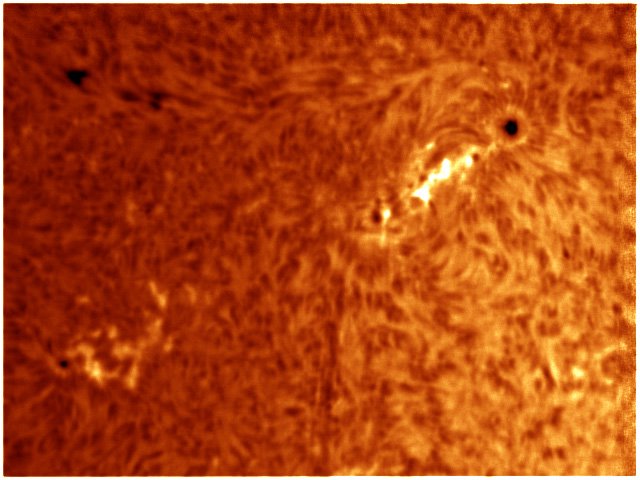
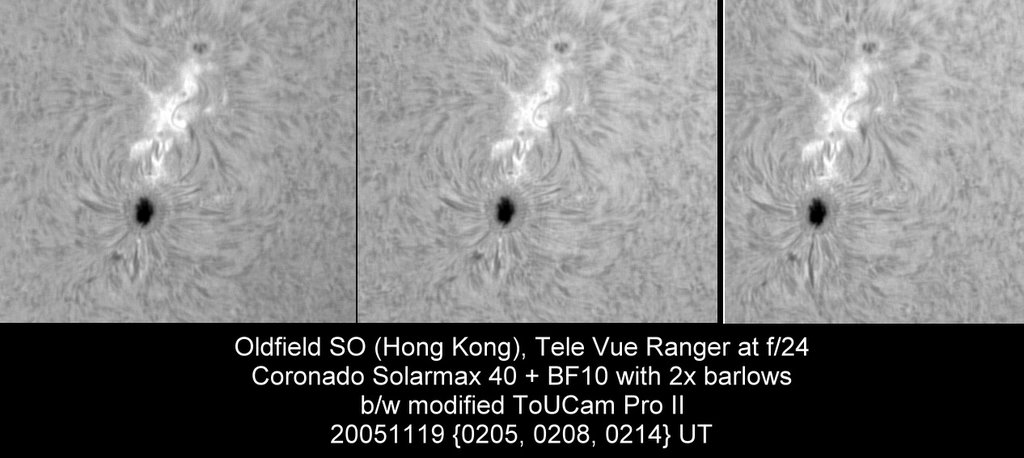
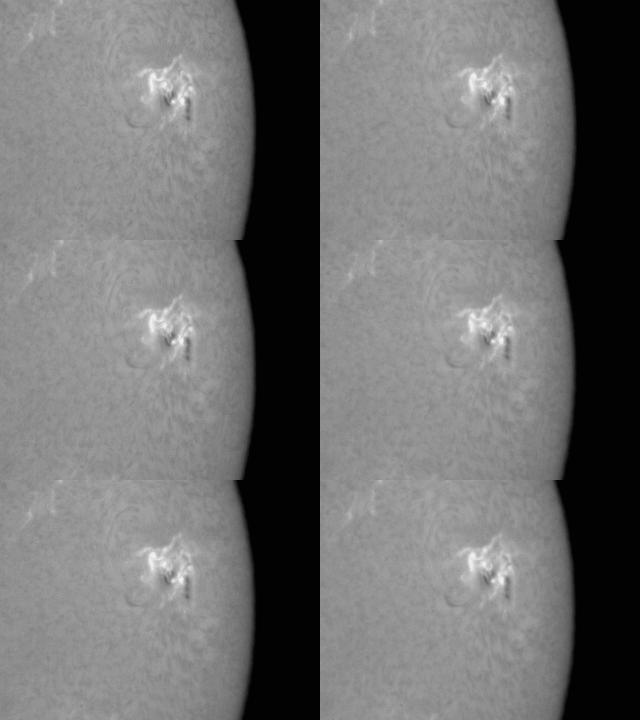
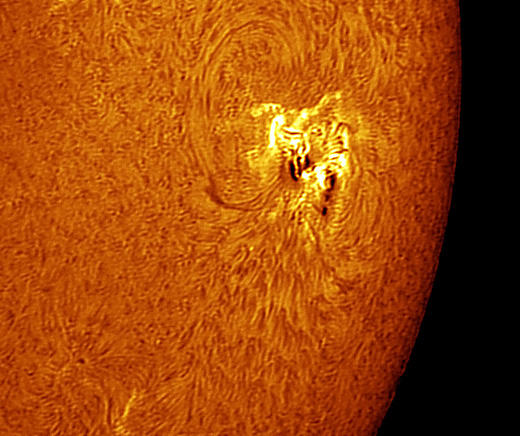
Close up of 875/876, Ranger at 2x, SM40/BF10, DMK 31AF03:


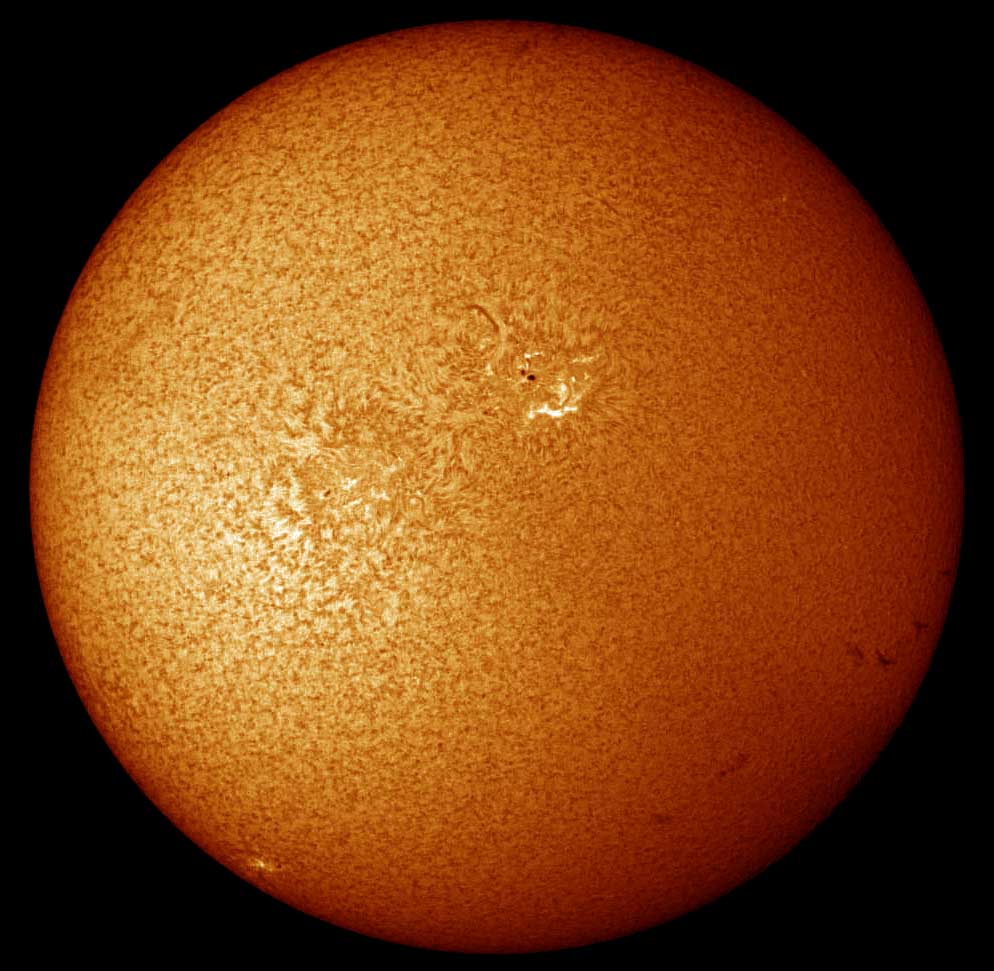
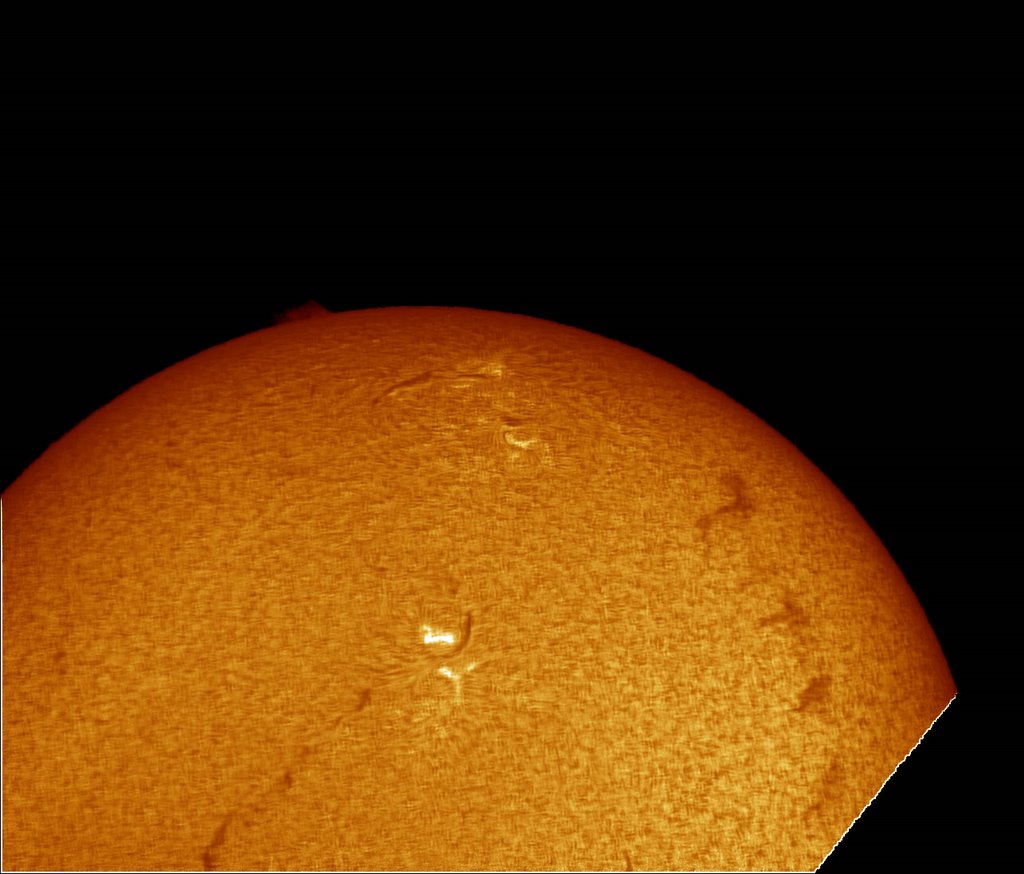
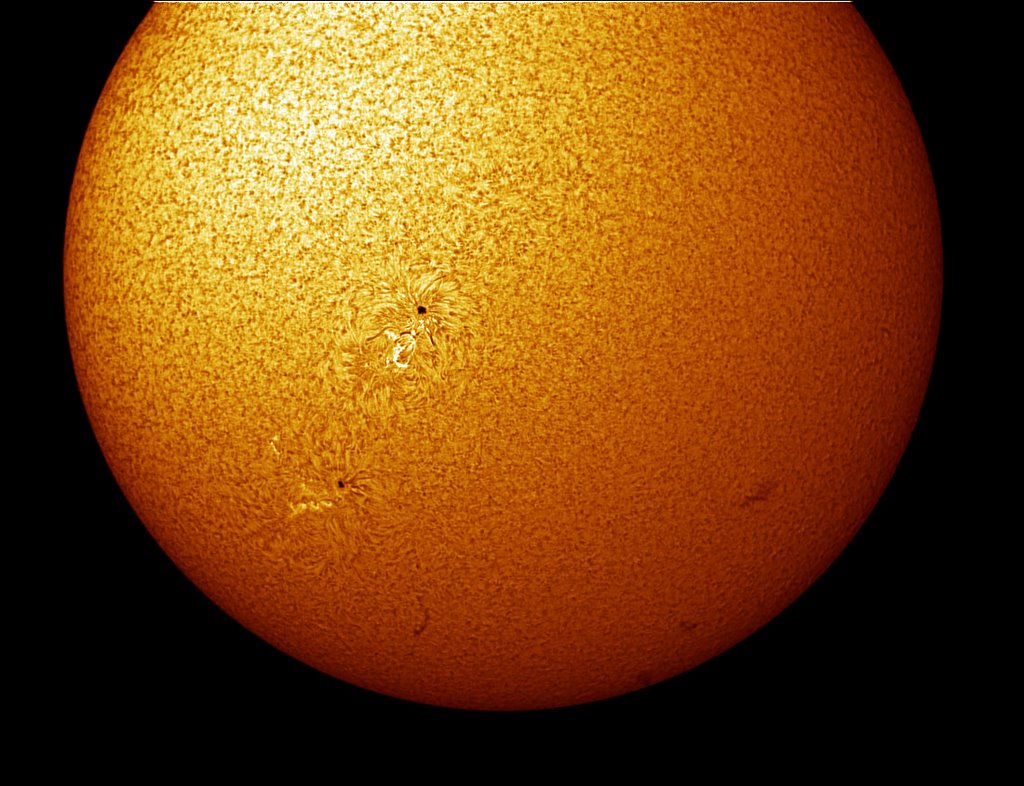
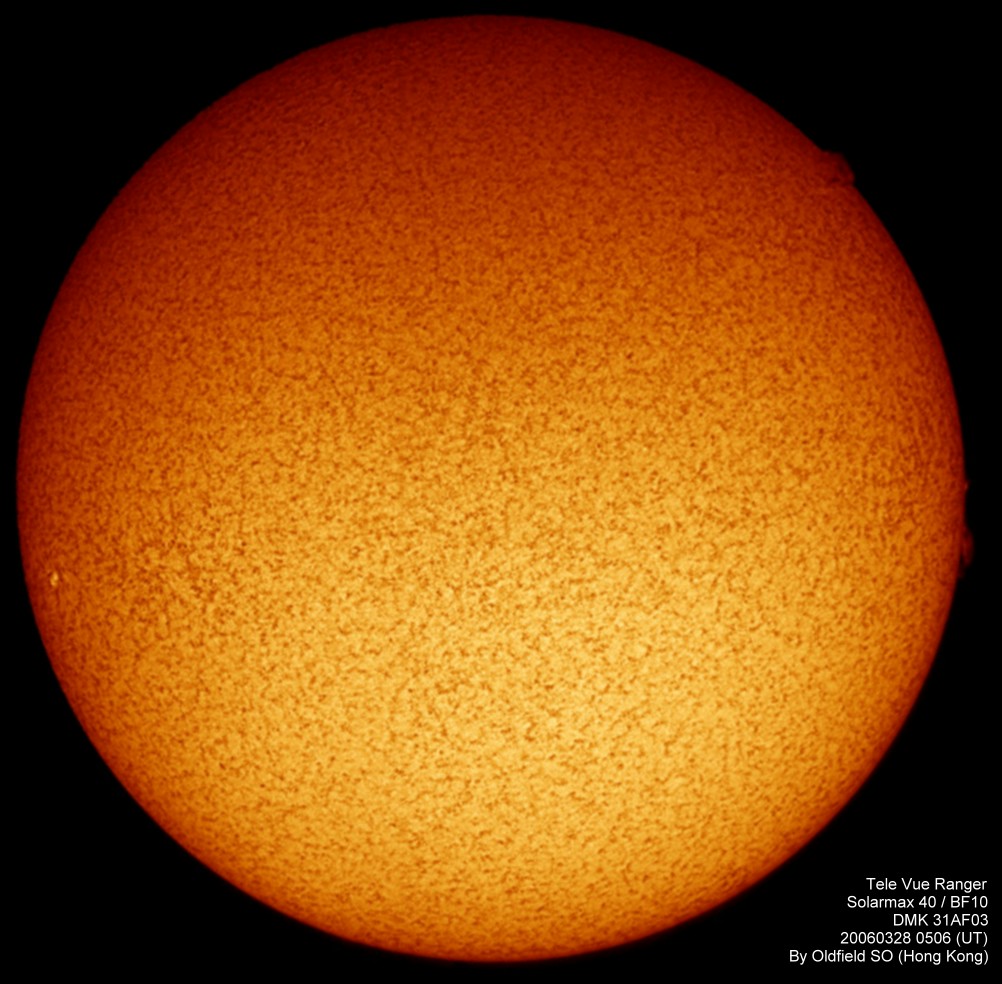
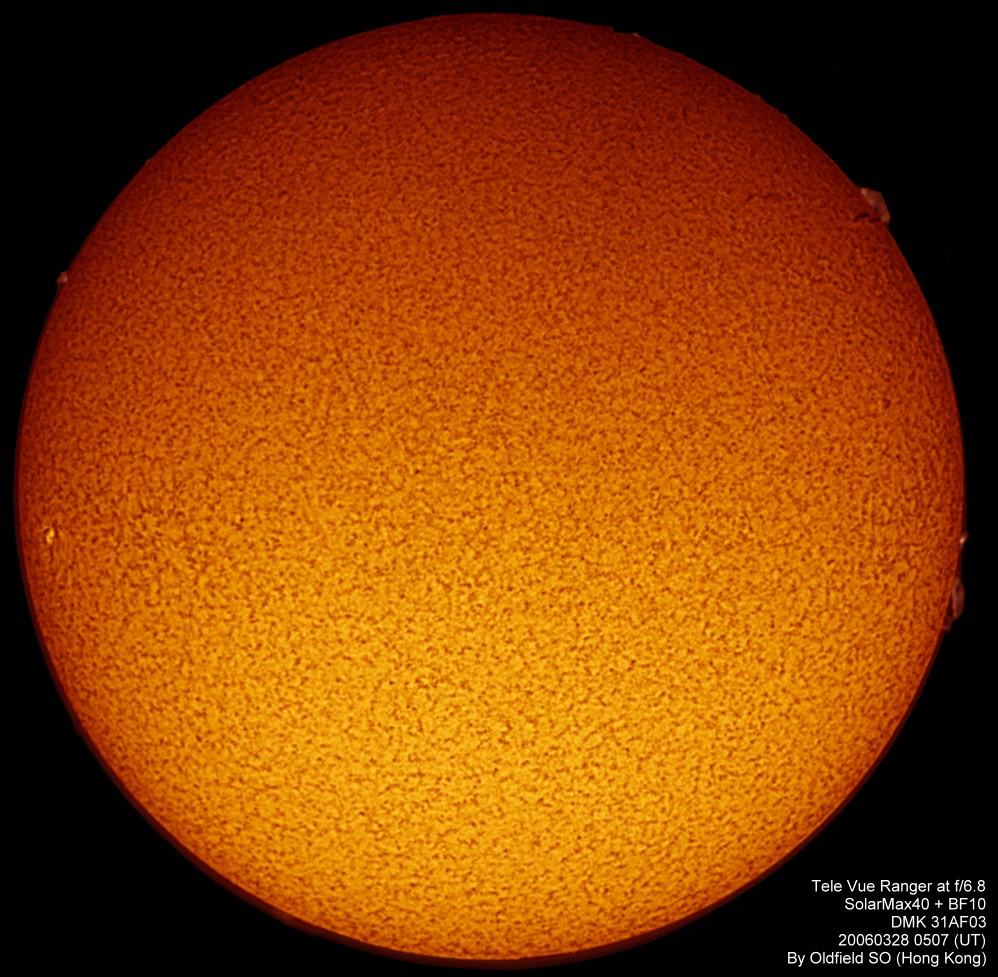
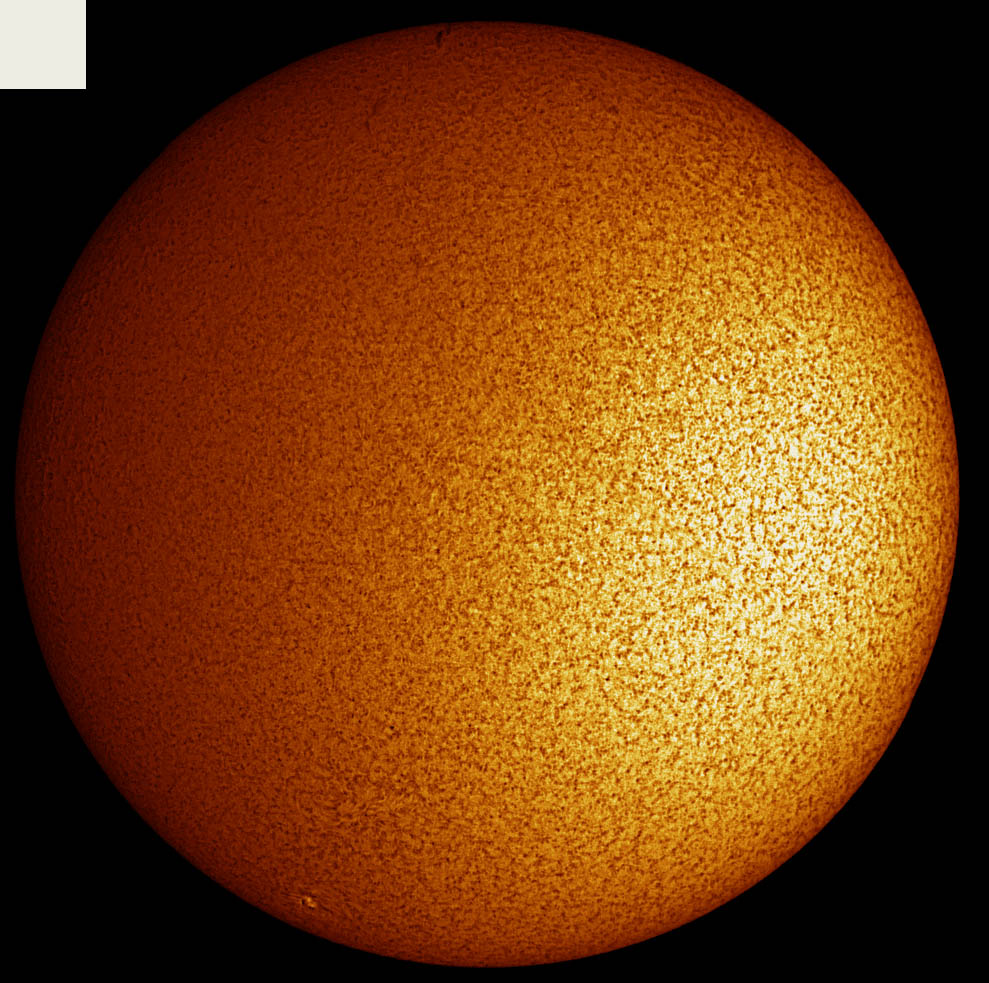
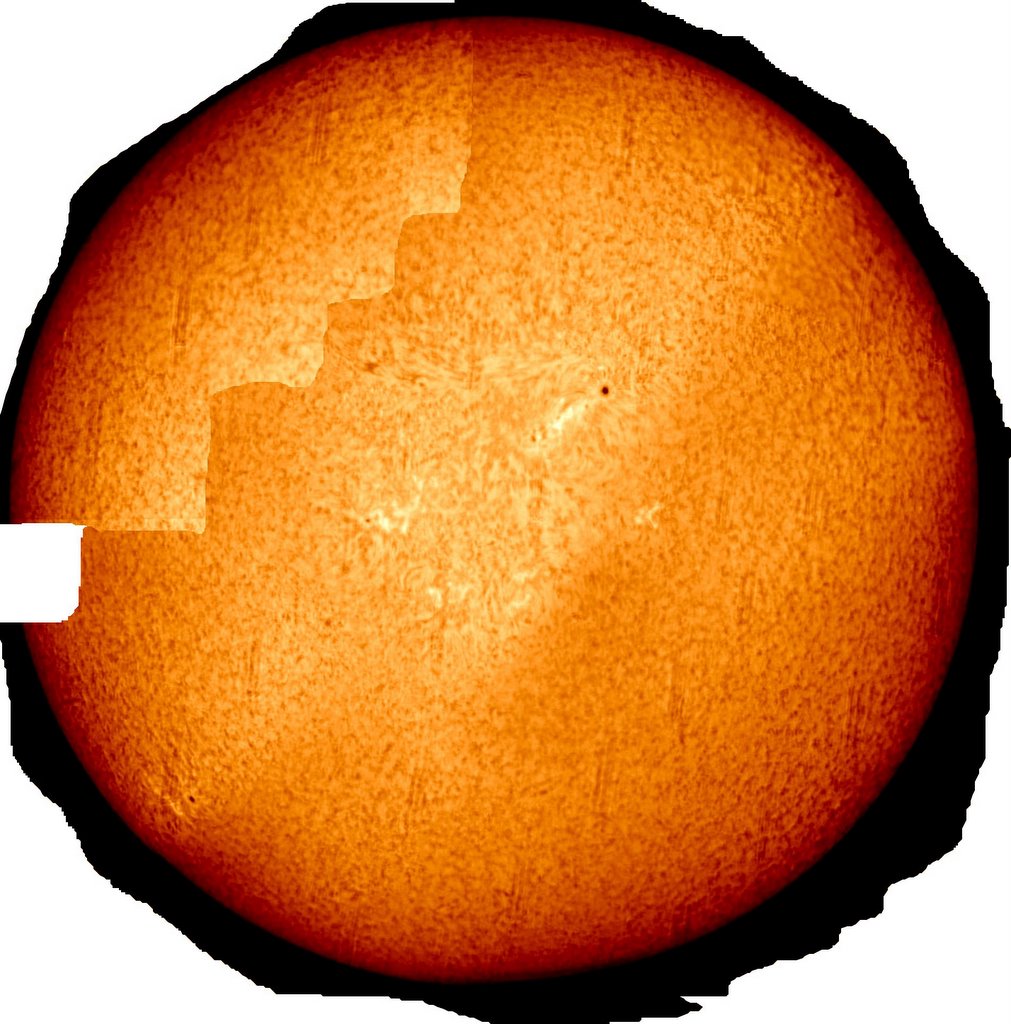
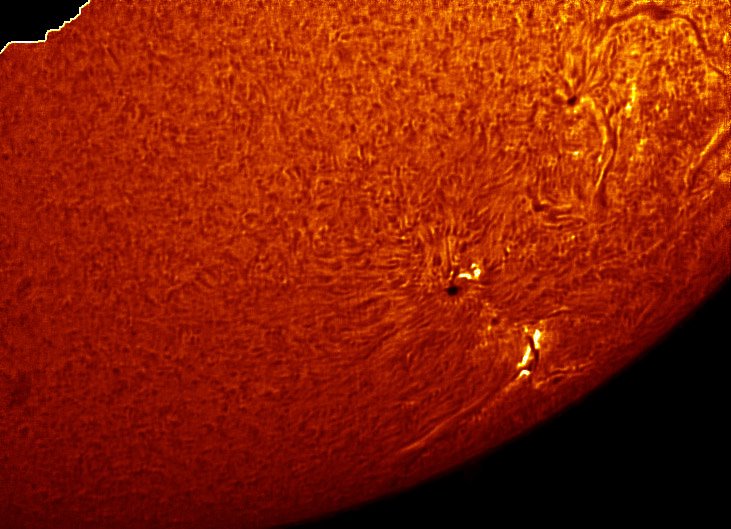
Full disc, but merged very badly since the top half and the bottom half are taken far apart, 1544 and 1551 respectively due to cloud:

Sunday, April 30, 2006

20060430 solar observation

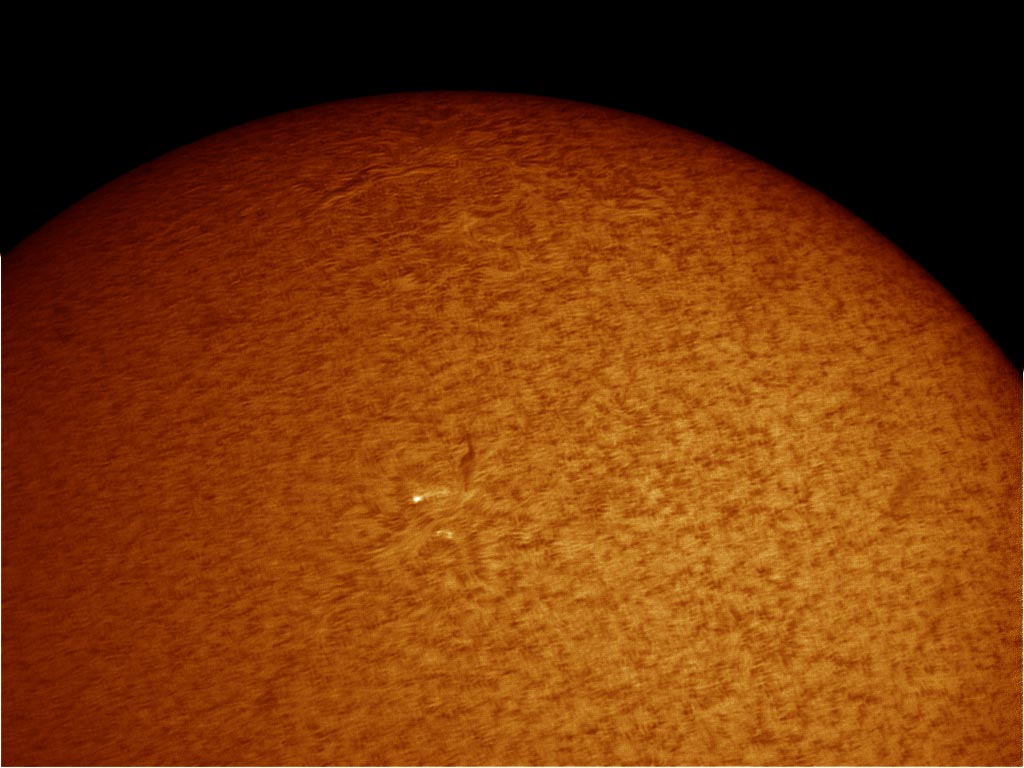
Taken at 1640, Ranger 2x, SM40/BF10, DMK 31AF03, 876 and 875.


Full disc, ranger at prime focus:


another full disc, same raw AVIs but different approach:


The raw are two AVIs, one covering the top part and another one covering the lower part.

The first one is done by stacking two AVIs separately, and then stitch them together via Photoshop, process the stitched again by registax wavelet, and fine tune again by Photoshop.

The second one is done by stacking two AVIs together, via a common alignment point and use expand image to merge all frames together according to the common alignment point, it's then wavelet processed and fine tuned by Photshop.

Seems like by using a common alignment point, more frames are stacked together effectively for a larger area, and then allow stronger processing.

An AR875 close up, specially processed to burst contrast, may look not very natural:

Wednesday, April 19, 2006

20060419 1454 (HKT)

Borg 45ED, 2.5x corrector at nosepiece of DMK 31AF03, non-tracked:


Add some more shots, closeup:


One more full disc taken at 1448/1449


1458:

Wednesday, April 12, 2006

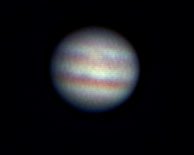
Jupiter with C8

Around 4:15a this morning, I put my tripod on the floor instead of on the window platform, I found that I can comfortably set my C8 on the LXD55 to point to Jupiter without major blocking.

The view on the eyepiece review that the scope was slightly out of collimation, I tried to fix it but only to make it worse, I didn't do it for long... after maybe 10 minutes, I managed to fix it but the cloud was already covering... before full coverage, I managed to see it briefly on my DMK.

I hope I will have chance to get a good pic soon. Not bad to look at the eyepiece briefly, and also to re-learn collimation.

Collimation is easy as long as you don't require yourself to collimate AND to give all the screws a firm feel... I shall give it a fine tune when chance allows.

Saturday, April 08, 2006

Short solar observation

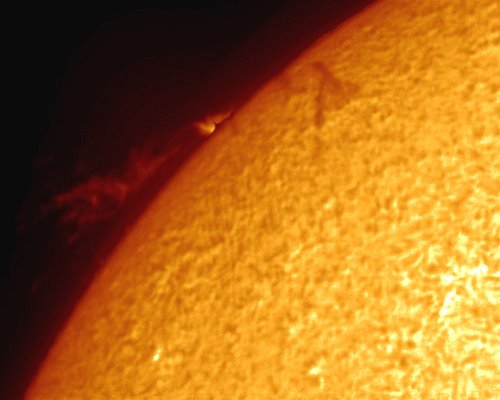
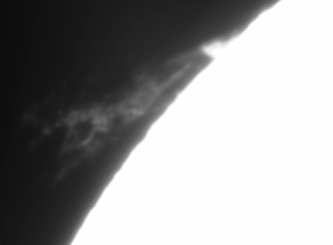
No time this morning, got a short gap this afternoon, but not enough cloud gap to capture more... just this one, prominence only, SM40/BF10, Borg 45ED, DMK:


seems like a CME is captured instead of just the tall straight prominence.

First DMK Borg45ED Jupiter


Seeing sucks... I was say it's 1/10 since it even affects 45mm aperture crazily, here's what I got, at 1/9s exposure, high gain, Borg45ED with 5x (way oversampling with small pixel size), fake color just for fun:

Wednesday, April 05, 2006

Observation today

Cloud come and go, only a few short cloud gap even I've tracked for the whole afternoon... here're the two which probably should be the best:


Ranger at prime focus for the surface detail shot, 2x barlows for the hedgerow.

A full disc shot:

Sunday, April 02, 2006

20060401 0606 (UT) AR865 866

Low power version, SM40 performs very well at this image scale (480mm):


Transparency 5/10, seeing 2-3/10

Double size with 2x barlows:

Saturday, April 01, 2006

Solar observation


Very short, to steal time actually. Seeing is 2-3/10, transparency is 5/10.

Two large AR comes out, namely 865 which is closer to centre, and 866 which is closer to the edge.

Ranger is used, no full disc shot captured for the lack of time. Since large AR are available, I used a 2x barlows to capture some AVIs at more than the theoretical limit of the SM40.

Attached is a 865, stacked with around 800 frames as a test first.. more coming.

Friday, March 31, 2006

20060328 1306 (HKT)


This is processed to keep as natural as possible, emphasis on surface detail and to merge prominence in a connected manner. A bit too soft to show all the delicate detail, but this should be more comfortable to look at.

Wednesday, March 29, 2006

20060328 1307 Finished merged

Reprocessed the surface detail without histogram stretch to minimize the effect of improper T-max tunning, merged with prominence.

A glimpse

This is not an observation at all... around 5:30a this morning, I looked out from my playing room window, saw Jupiter (should be?) outside, it's pretty low, but it's directly outside which I think my C8 can be used.... Let me see if I will have chance to test it out... the sky was already blue at that moment.

Tuesday, March 28, 2006

A full disc taken by Ranger


Using the expand technique of registax, quite boring today but I was amazed by the amount of subtle detail, 30 fps is so powerful! VRecord + Vdub post processing can attain full 30 fps!

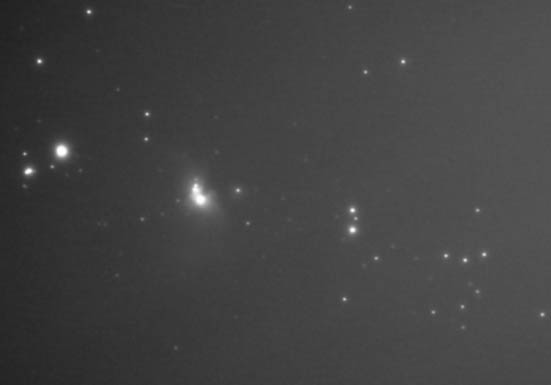
DMK Urban deepsky

Fujinon 75mm f/1.8 at f/1.8, low to medium gain, 5s, 10 frames stacked, on LXD55.

Thin cloud moving around, 10s zero gain will saturate the whole frame.

Happy with the result, since it's done in urban area and I still have 25 more seconds to play in darker sky.

Monday, March 20, 2006

18/3/2006 Remote setup first light


The equipments are all ready, adapter tube shortened to reach focus easily. But I didn't do remote control this time, remote control still have some problems:

1. Locations: need to find a better location to host the mount/scope
2. Alignment: need to align and GOTO sun, remote focusing issues

But here's the result.

Wednesday, March 15, 2006

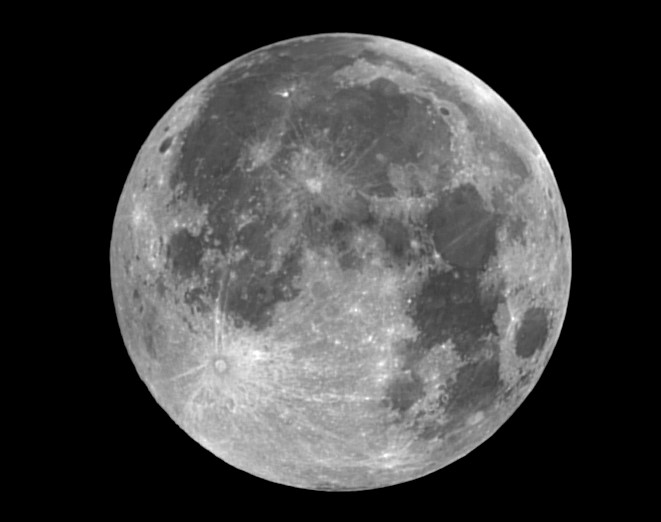
Penumbral eclipse

I watched until 5:57a until the moon was totally blocked/eclipsed by a nearby building.

Didn't notice anything special about the moon, since it's not yet in the deep part of the preumbra... but no choice, that's the best I can do inside my home.

The Borg 45ED is very great optically, better than my Ranger I should say, no chromatic abberation can be seen at all... I spent the time at my eyepiece (20mm widescan) for the last few minutes...tack sharp!

It can also capture the full moon disc with the toucam pro, why I was using it was because my 1394 cable is too short, but the coming hubs should solve the problem altogether.

some more frames to be processed, remotely tomorrow, hopefully.

some more test shots were made by the 75mm fujinon prime lens as well, a very good night...

as a new camera/scope testing night.

Some results:


Sunday, March 12, 2006

Third failure night

This is probably the third consecutive failure nights (morning?!), I woke up, set the things up and finally got only fog... I just want to test wide field with Fujinon lens but so far still failed, not the camera nor the lens but the sky... fog will come it and kill everything just before I turn on the camera....

Coincidence...?

Friday, March 10, 2006

First DMK observation (not photography)

Set up the DMK to test again with the Fujinon 75mm f/1.8, pointed at Sirius and slew around, I found that many stars can be seen despite the super foggy sky, transparency is less than 1/10, I would rate. I can see 3-4 stars only despite Orion was hanging out there.

I estimated that it shows more than my 10x50 binocular just the same sky.

Exposure was 1s, 3s will saturate the whole screen, 0 gain.

Focusing is extremely easy, one can turn down the exposure setting to say 1/30s or even faster, that would allow 30 fps, and push the gain up. I found the gain of this DMK is so powerful that exposure can be reduced quite a lot by pushing up the gain, yet the noise level is still under very very well control. This is very very useful for focusing.

2-3s exposure will already reveal the need of tracking, I just used my Unistar for the quick test.

Under such sky, I attempted to locate M41, but failed. I suspect it was there, but it was just some more stars but never a cluster, so it was never confirmed.

Very promising I would say, if it can ever be done successfully, a wider lens should be acquired for milky way shots, and f/3.3 reducer should be seriously considered as well.

Saturday, March 04, 2006

Processed image taken this morning


Alignment on the planet globe top is easier.

Morning Jupiter


It's fun just to setup the equipments, since I didn't do so for soooooo long...

After selling the GiroDrive, now can only stick with the LXD55, it performs quite well, but just the viewing angle is further limited.

Seeing was 1/10, nearly 50% of the frames cannot see the = on Jupiter, transparency should be rated at 5/10 at least by my eyes, but at f/32, it reaches over 50% gain, so... anyway.

GRS can be seen in the raw on and off for a few frames, overall appear in the processed imaged, Sky90 + 5x + color toucam pro.

Friday, March 03, 2006

Short observation 2nd of March 2006

Inside home, quite clear as it looked, sky was quite black, rare in Hong Kong, probably due to a cold front.

Setup my Ranger on Unistar Light, scan around using a Nagler 13mm, scan around Sirius but failed to locate M41, actually, it's suspected but the air was probably till too bad to reveal a cluster.

Used my Pentax 10x50 too, but failed as well. Long time no use this binoculars, couldn't focus at first since the right eye is adjusted out of normal... move it back and everything becomes normal.

Tuesday, February 14, 2006

11 Feb 2006

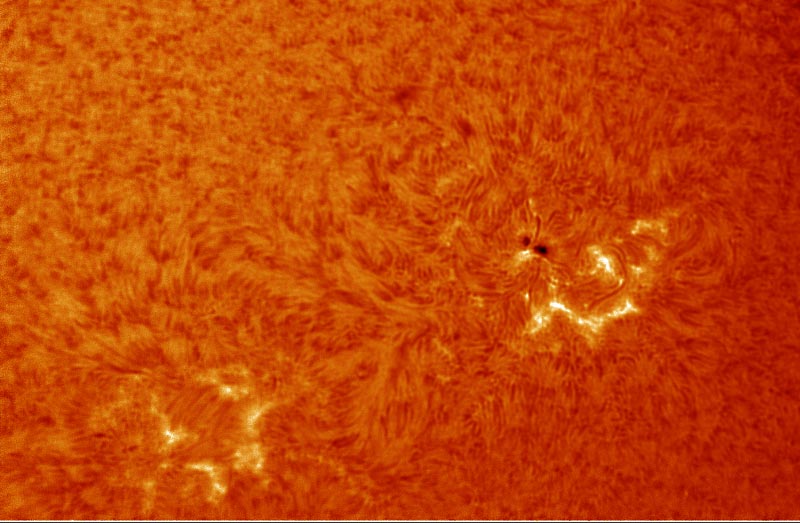
This is a H-alpha solar observation party organized by HKAS. This is the 3rd or 4th time which I joined their observation in all these years, due to my family engagement.

Observation location in Hokoon in Tsuen Wan, around $25 HKD taxi from Tsuen Wan MTR station, it hosts the biggest robotic telescope in Hong Kong, at least once the biggest.

On the spot were several setup, mine is a SM40/Ranger/binoviewer/TGSP2, a close by is a internal double stacked maxscope 60mm with video camera (Watec), a CaK setup on a maybe 3" refractor, a double stacked SM60/Sky90/Tak EM2 with Lumenera Infinity 2-1 camera.

The sky was bad, very foggy. The view on my setup were very dim, featureless in the first glance. Similarly for the CaK setup, it was bright, but again looked featureless.

On looking through the internal double stacked setup, the contrast was much washed out by the dirty air, but still, we can see some feature, a quite long filament too despite there is no sunspot at that moment. A bright patch can be seen near the filament end.

Upon discovering the feature, I can locate all of them from my setup as well. And then I switched to the CaK setup and saw the same bright patch. Not bad.

We did some side by side comparison of the two 60mm double stacked system.

1. The internal one gives a dimmer view, slightly less contrasty, but no ghost image to begin with

2. The external one gives a brighter view, more contrasty and a ghost image which should be removed by tilting the Tmax.

Double stacking provided a dramatic difference. The internal one is matched by Coronado but the external one were obtained without matching, so you see external double stack really better.

For photographic usage, I would say better aperture should be better since it provides more resolution. However, without great contrast, resolution means nothing since you cannot differentiate subtle difference due to the lack of aperture. Resolution and contrast are twins. Having said that, I'd rate aperture more important than bandwidth for photography, and bandwidth more important for visual observation.

For photographic purpose, the b/w toucam which I just acquired in the same morning didn't work at all. So, we only have Lumenera and Watec b/w video camera for comparison. Frankly, both work out great... I'd prefer the far more expensive Lumenera a bit for image quality, due to the higher frame rate and bigger dynamic range.

Video setup is good in the sense that the head is lighter, a DV recorder will be easier to operate and the battery will last much longer than a notebook. That Watec features a 1/2" CCD chip which is enough to encapsulate the whole solar disc and with propose powermate/barlow, high level detail can be obtained without problem.

With video system, you can have PAL to get more pixels at 25 fps, or NTSC at VGA but 30 fps.

An eye opening event, too bad that the sky does not very much cooperating.
Sunday, February 05, 2006

Short observation

LXD55, fake align, GOTO sun, very good indeed.

SM40/BF10/2.5x corrector, binoviewer

Only a very short filament, and a not very good prominence.

Dare not to take any image. :-)

Tuesday, January 31, 2006

H-alpha again

Binoviewing is the best. Better than the 13mm Nagler.

The filaments are more or less similar to yesterday but what I can see with two eyes and far more detail than single eye.

Monday, January 30, 2006

Just an observation

Purely visual at the beginner, didn't open the window nor the window frame... since spaceweather said the sun is spotless these days.

Used a 13mm Nagler, very sharp and great view, two filaments stretched across the solar disc at nearly 1/3 disc length, a nice cluster of prominences can be seen as well... Short but very wide.

Finally can't held myself from imaging using a color webcam which is the only thing I had at this moment. Black white mode does help on focusing but still, I've overexposed it and thus only a small part shows detail.

Sunday, January 01, 2006

1/1/2006

It marks a new year for my solar observation.

I didn't take any photograph today, but I did observe with my binoviewer, there seems to be 3 long filaments in the 1/3 part of the disc, but careful examination seems to reveal that they're actually ONE SINGLE crazily long one, it spans at least half of the solar disc

however, it tends to say it's not continuous, with more careful look, you can see in some parts they're really too thin to say it's connected.

there're some nice prominence at the edge, one is especially fun to look at!!! it looked like a inverted M attached to the solar limb, or shall I say it's a W!!!

841 is the single most attractive active region in my finder sized 40mm system.

Finally, I waited for sun to set on a remote building and it's really a great site in H-alpha!

Tuesday, December 27, 2005

Mosaic


This one is the mosaic for 840/841 instead, the last one is taken by pan and expand.

Monday, December 26, 2005

Solar observation


840/841 mosaic at f/24

plus 838 at f/36

Sunday, December 18, 2005

Solar observation today

Woke up at 4:30pm for a good afternoon sleep, watched briefly without opening the window (!!), the view was not much affected.

Used the Unistar mount which is easy to setup and use, 20mm Widescan view is less great that the 13mm Nagler view, which is simply optimal I would say, at least for visual impact and contrast. Also taken some afocal shots, but it's going to be no good since my 12x DC is not good at that.

Two solar observation


17 Dec 2005: afternoon, very brief, taken some clips as follows, one at f/36 and one mosaic at f/24.

AR835 and AR822, 835 was also magnified.

Wednesday, December 14, 2005

Nice prominence on 20051127


No time to process until now, they're quite nice indeed!!!

an alternative way to gain more field with webcam


We know that webcam has a very small chip with limited amount of pixels, and if we want more field, we will usually make mosaic.

Making mosaic is quite tedius and hard, for examples, to fully utilize only 40mm of aperture, I will need over 40 raw frames stitched together to ensure enough overlapping. It's hard to imagine if one use a larger aperture, it would mean a lot of work.
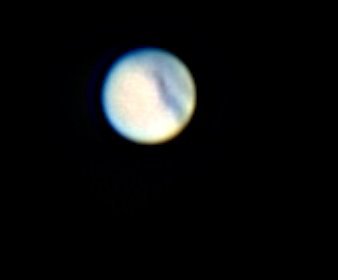
Attached please find an image taken with a webcam, it has more than 640x480 and it's wider than a webcam can give, but I don't need to go through the stitching work. It's just a proof of concept shot, so don't let the poor quality to turn you down. :)

The key is to use "expand image" is registax.

In around the middle of the image, you can see a sunspot. To capture a wider area around the sunspot, I start the AVI capturing on the left of the sunspot, keep it there for a period of time, say 20s and then you start to slew your mount slowly to the right, so the sunspot is now on the left without stopping the capture, now stay sometime on the right of the same sunspot.

So, the above AVI contains both the images of the left, middle and the right of the sunspot. Notice that it's just a single AVI.

To stack it, make sure expand image is selected, and you align using the middle sunspot. The resulting stacked final will contain both the left and the right of the sunspot.

Such trick should be useable on the moon as well, the good thing is:

1. one saved time to stitch
2. one saved time to adjust brightness contrast and those stuff before stitching
3. one saved time without having to derotate the frames
4. one can 100% sure about overlapping

I shall try more to see if it really works, and also, I believe instead of from left to right, one can even go up and down, given a common patch is available for alignment during the stacking process.

Saturday, December 10, 2005

Short sort of observation

Has been cloudy the whole day, but sun breaks the cloud at around 16:00 and I can get a gimpse of it shortly before it's blocked by buildings.

The Autostar cannot locate it well, seems like it's not very accurate to put Sun as an asteroid, anyway.

The Sun is very quiet, with a small sunspot, but when tuning the t-max, I can see several nice filaments on the surface, I can also see a plague somewhere, and it should be the remain of 826 (?) forgot the number.

Nice...

Still got to find a method to balance the SM40 on the ETX.

Thursday, December 08, 2005

Mosaic failed


But here it is.

Steps:

1. Capturing: use all the same settings, make sure exposure are the same. capturing from bottom to top, to avoid backlash, start in the east and match to the west; after completing a series of the same DEC, adjust DEC to capture the next series.

Allow more overlapping. I was too greedy and aggressive at first and thus the first strip cannot be merged to the rest...

2. Processing: turn off predict track, since the subtle detail on the solar disc is better non-tracked than tracked. disable stretch histogram, expand image can be left on or off. Finally, wavelet process the stacked result briefly, but remember to use the same amount of wavelet profiles. This step will allow stitching software to work more effectively.

3. Stitching: stitch all at once, don't do it piece by piece.

Wednesday, December 07, 2005

AR826 on 1203 and 1204


Some results


Seems like I shall pay more time in this blog than in forum, here's one of the surface detail combined with prominence.

Monday, November 28, 2005

Mosaic failed

My b/w webcam has a scratch in the middle of the CCD and thus all the frames are ruined for big mosaic, waste time... X(

Shall use expand image to ease the effort of taking raw AVIs to do mosaic, I expect originally around 30 AVIs can be made to around 20 AVIs with good overlapping.
Time to make a new camera again. :-)
Sunday, November 27, 2005

Solar observation

No observation yesterday due to the wedding of my friends and also due to the lazy-ness of myself (hazy sky), AR822 is more more.

Today no beautiful active region but some beautiful prominence.

Did captured 30+ AVIs to mosaic together, see how's it come out.

Sunday, November 20, 2005

20051120 AR822 again


this time inside home while Alby was sleeping, again on TG-SP II instead of non-aligned mount since aligned mount is a joy to use indeed... think to kick the LXD55 away.

A sample picture at 0714 (UT).

Consolidated AR822 on 19Nov2005

Saturday, November 19, 2005

Solar observation during dancing class of Alby


in a nearby small park, not bad especially in Autumn sky!

Sunday, November 06, 2005

Remote solar scope project closure

The focuser was left unmoved during last night, on setting up the whole thing today, it changed drastically so that it's unuseable for remote observation without a remote focuser.

Saturday, November 05, 2005

Remote solar scope first light


My remote solar telescope is ready, ready for use, but not ready for remote yet.

Friday, November 04, 2005

Mars observation (4/11)

Around 3:30-4:10am, LXD55 unaligned, Sky90.

Captured 3 clips using color toucam, the middle one has some parts covered by cloud, 5x Powermate alone. Tried to stack 2x on 5x, but the seeing does not support, a blur patch of light, featureless, so didn't capture any of them.

Sky90 was capable enough to deliver that image scale, since nearly no chromatic abberation can be seen.

Finally, used 13mm Nagler + 5x to observe, can see the poor seeing easily. Also, tried to use binoviewer, can reach focus, but can see some strange reflection. I remember that I saw it before... still dunno why. Put the 2x in, and it's even worse. Both can reach focus with the 2x SCT corrector before the diagonal.

Sunday, October 30, 2005

29/10


Poor seeing, no electricity night.

Tried b/w cam for 5x with Sky90, stacked with a 2x on top later as well.

Finally, the color one is the best, 5x only.

Monday, October 24, 2005

Three solar observations

22/Oct: Went to a playground (football field!!!!) to observe the sun briefly with my friend, he has taken some afocal shots with his Coolpix 4500 with 18mm ortho afocally, I just had a look, no sunspots but some QRF and some nice prominence.

22/Oct: Did some b/w webcam solar imaging inside home when Alby was sleeping, found a tiny crack on the CCD protective window, I got to track it poorly in order to erase that crack after stacking. Need to find a long term solution for b/w solar imaging. The result was not bad, afterall. I even got an 1 hour sleep afterward. :-)

23/Oct: Did some afocal imaging inside home when Alby was sleeping, should not give any decent result, time to give up that camera since it gives too much compression.

I also processed some AVI from that camera, even with -EV, it still overexposed crazily and the images are compressed way too much, can use G channel for surface detail and R channel for prominence. File close.

Friday, October 21, 2005

Short Martian imaging

I did a short observation this morning from 0400-0430.

LXD55 was used in a non-polar aligned manner, just hand track with the control box, Ranger is used without a counter weight to maximize the clearance to be used at home, and to point outside as much as possible.

At 5x, very low gain is used with the color ToUCam Pro, transparency was nice, but cloud was floating around, making imaging a nightmare especially without tracking. I can only get a single clip with around 500 frames.

Preliminary processing reveals the detail on the Mars, despite the small image scale, I believe I caught the dust storm too, and it's already very BIG. Got to find chance to shoot in the street, or else I will get a dust filled featureless globe soon.

Wednesday, October 12, 2005

Playing afocal


Got a short break yesterday during Almy sleep, did some non-tracked afocal shots with my father's A85 instead of webcam again, this camera has a lens more suited for afocal imaging, those QRF should be the original strong 798.

Friday, October 07, 2005

813 and ghost of 798

813 was not too small... binoviewing shows it all even at moderate power.

that so called ghost of 798 was several filaments... some nice prominence at the edge.

I did took one white light and a h-alpha image as well, cloudy at first but cleared around before sunset...

was a sick leave... slept and then did it, a bonus.

Tuesday, October 04, 2005

First look on Mars in 2005

This morning around 5:30am, I had the first look on Mars in 2005.

Mars was very high in the sky, barely ok with my Ranger, not EQ mounted but with the tripod pushed against the window and using the 410 head. The 410 head still works very well.

I used my Ranger since C8 was not useable at that viewing angle. With my 20mm widescan, the field was filled with stars, missed that feeling for long. Panning around with that slow motion control was nice, very enjoyable experience.

With the 20mm, and even the 13mm Nagler, the image was dead small and super bright, enough to wash out any detail... chromatic abberation is very very obvious.

Adding the 5x barlows revealed the detail inside, chromatic abberation is not much worsen, and I could see it's the "X" side of the Mars, polar ice cap was briefly detected, also those hazy atmosphere around the limb.

Everything was done within around 20 minutes, since no imaging can be done, packed up very quickly, missed this feeling for long.

Sunday, October 02, 2005

Short solar observation

SM40/BF10 Ranger 13mm nagler

had a brief look, very quite, can see a small active region, barely resolvable.

a medium sized prominence at the edge, extends inside the solar disc to form the most notable filament at the time.

1 Oct 2005, afternoon around 4:30p HKT

Tuesday, September 20, 2005

Quick solar observation session

For most of the time, EQ mount cannot be polar aligned inside my home, and it's proven.

So, this time I used a LXD55 non-aligned... AR798 has gone out of the view mostly, but on image capturing, I believe part of it was still in view, and I got an image of it as well.

Another not too small AR810 was in view and I captured it.

This time, the b/w cam is unavaiable, and I checked that focusing and exposure was a bit hard to set, but the outcome was not too bad, just some reduction of resolution, but still very useable, I mean for the color webcam.

Sun requires huge dynamic range, so I think we need more like a 16 bit camera more than anything. ST402ME cannot do faster than 1/25s render it useless for h-alpha imaging, or maybe need to use some neutral density filter to reduce light... but...

Thursday, September 15, 2005

20050910


So much fun despite exceptionally poor transparency, normally use 1/250s in average day and 1/500s in great days, these are taken at 1/25s, sometimes we have objects fly by the solar disc:

Saturday, August 06, 2005

20050806


The sun is still very strong, three very large active regions.

First time really try b/w webcam but super poor transparency tonight, wash out all the contrast, anyway.

Tuesday, July 05, 2005

Non-qualified

This is not a qualified observation log, anyway.

Prepare to go down to the street to shoot Jupiter while it's still not too low. Packed all the stuff, found that the trolley is missing, after extensive search, found and go.

The trolley is a bit overloaded, anyway, a short walk only.

Walked to the park which I scheduled to go, it's hidden by building or whatever.

Came back to the street near my home, the pavement seems okay, but it's too narrow, afraid that I will be kicked out by police or whatever.

Gave up eventually... very hot, tired and all wet by sweat...

Sunday, July 03, 2005

The sun is so active!

The sun is so active right now so that there're two filaments, some very nice plague and active region, sunspots everything except no huge prominence.

First time tried to shoot at f/36 but found it a bit noisy to use 1/500s. Let me try lower gain next shoot!

f/24 shots are all amazing to my eyes, b/w is better to detect over exposure, which is so easy for h-alpha imaging!