Wednesday, August 30, 2006

Short imaging session - but 5 targets!

This time tracked by LXD55, again, the results show that, even a small 75mm f/1.8 lens with DMK, reveal far more than I can detect visually with a C8, maybe video astronomy is the way to go for urban indoor astronomy.

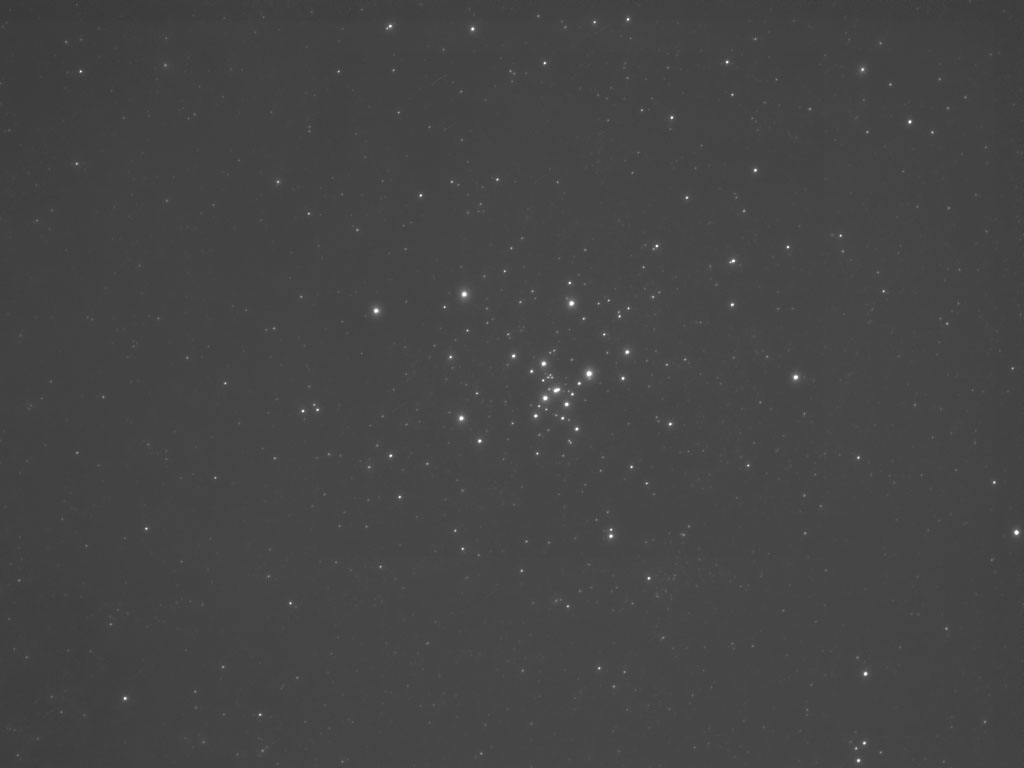
Belows are mostly identified after the session, the M8 could be M20? Is that M6 really M6? Only the M17 is really M17... haha...

Target 1 (M25?): 4.524s * 100 medium gain - clip 1

Target 2 (M8): 7.493 * 60 medium gain - clip 2
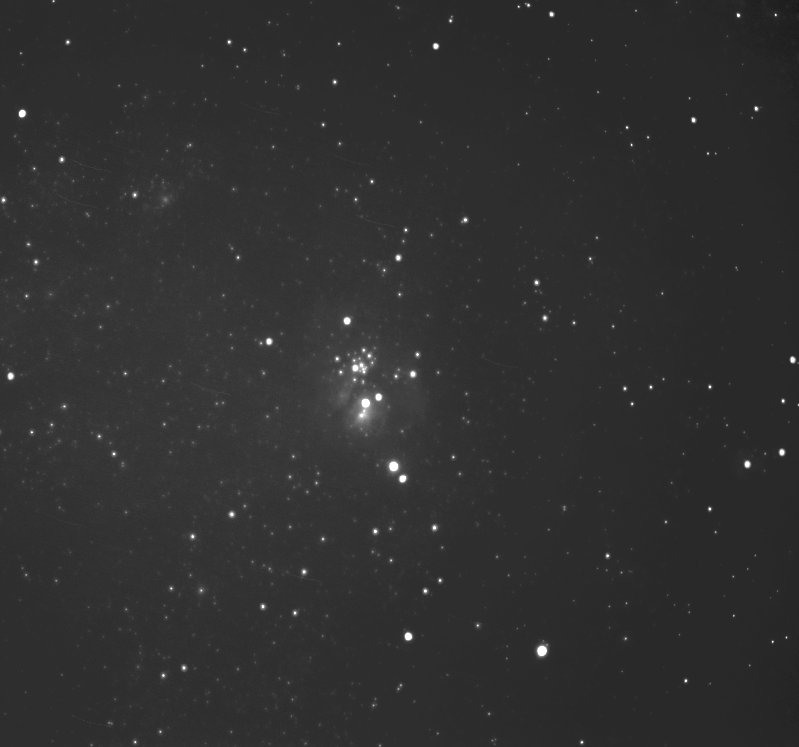


Target 3 (M6?): 2.732s * 50 medium gain - clip 3

Quick and dirty processing on spot:-
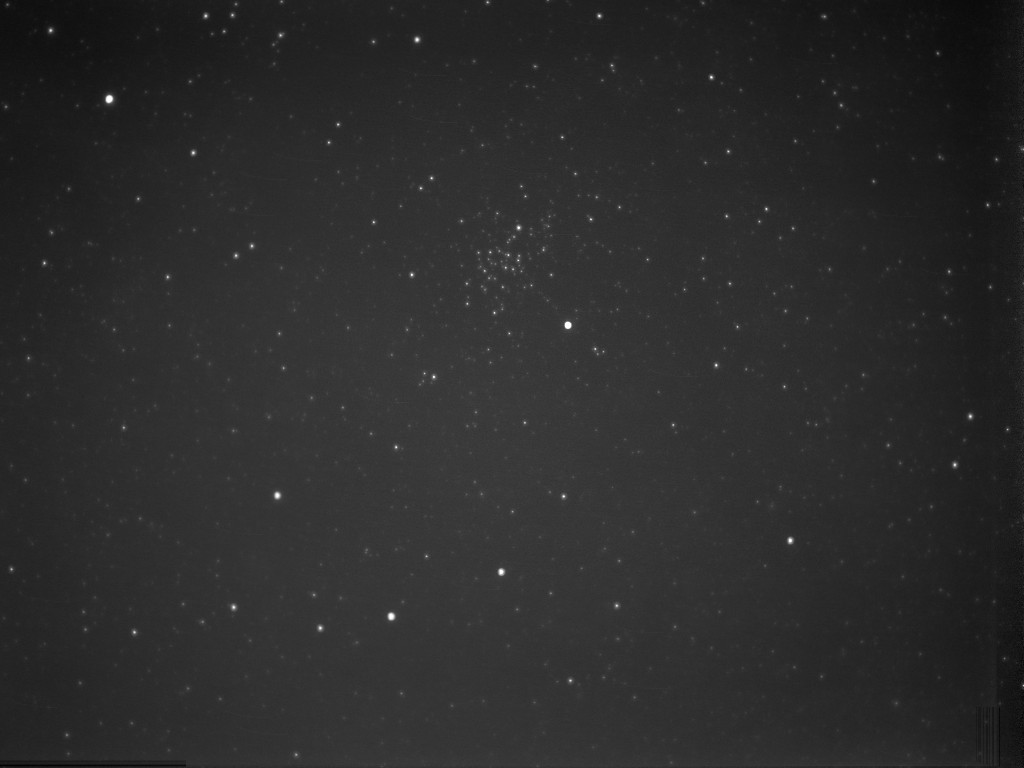


Re-processed, this one was getting very low (just above the buildings in front of me), so the noise is pretty serious:-
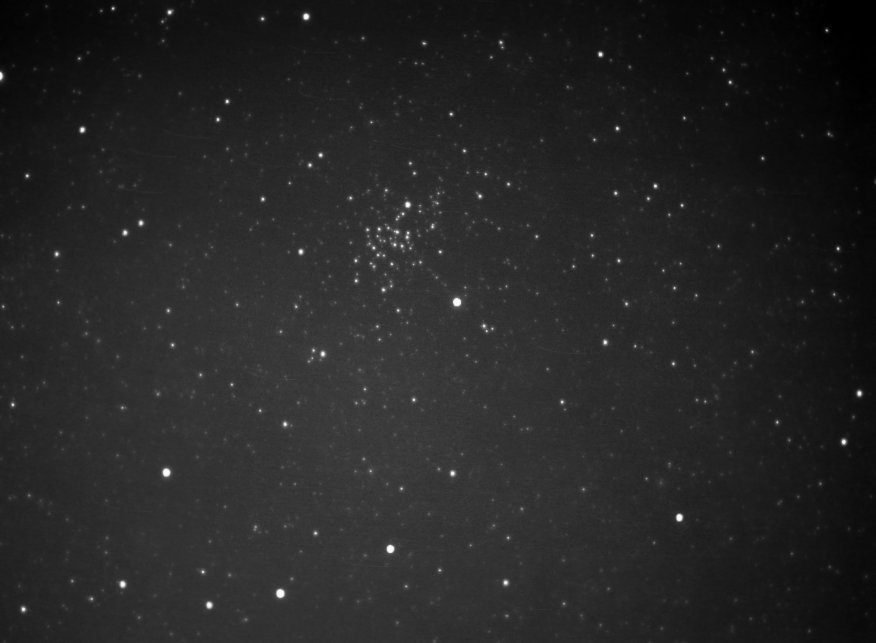


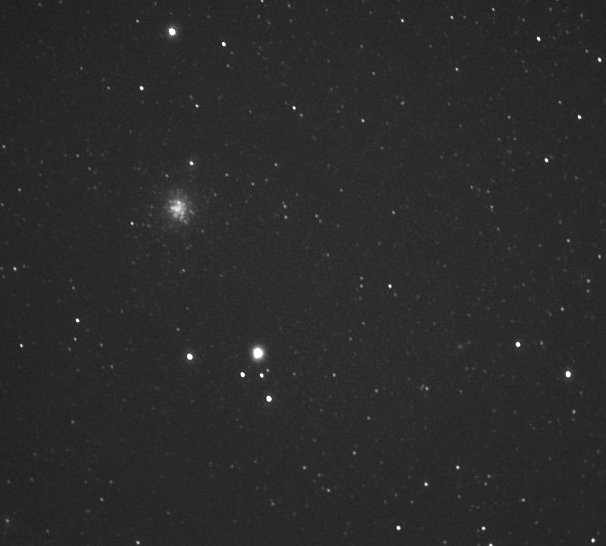
Target 4 (??): Unknown target - clip 4

In this session, I scanned around with a 8mm lens, stop when I saw non-stellar faint fuzzy, and then I centered it and use my 75mm lens to zoom in, so I would stop by unknown target, this one is probably a big open cluster or just a star rich region of the milkyway?
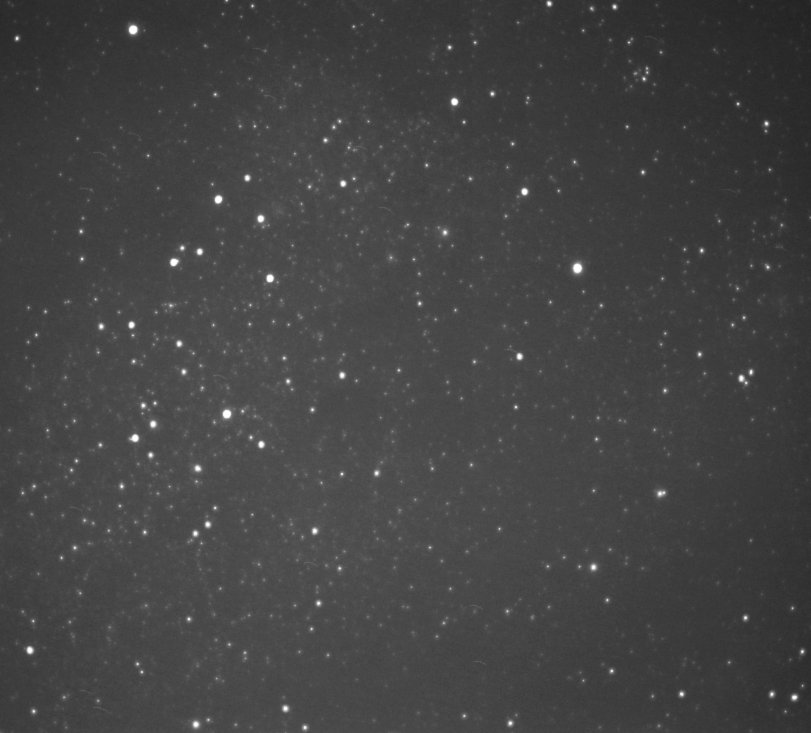


Target 5 (M17):

5.132s * 60 medium gain - clip 5
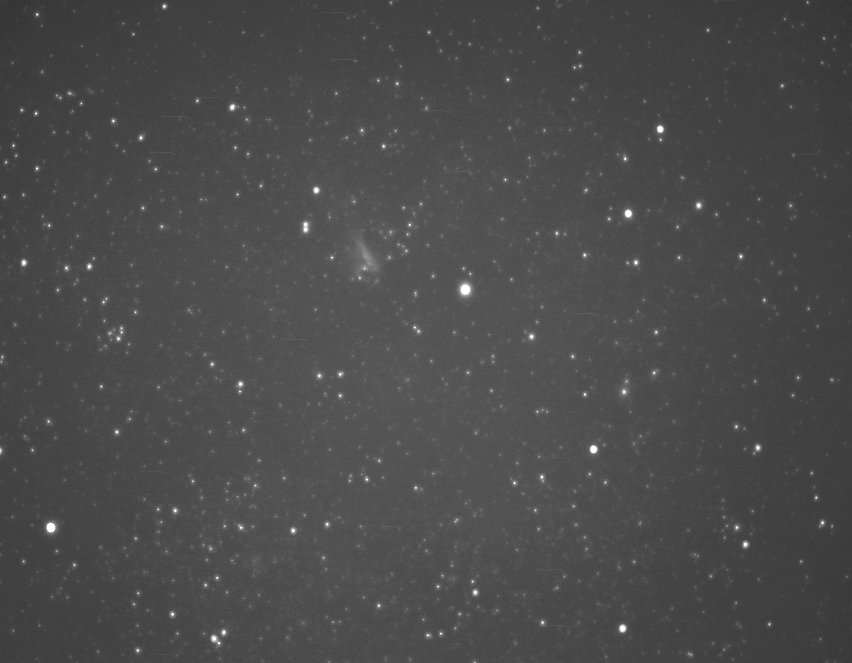


12.409s * 30 low gain - clip 6

Quick and dirty on-spot processing:-
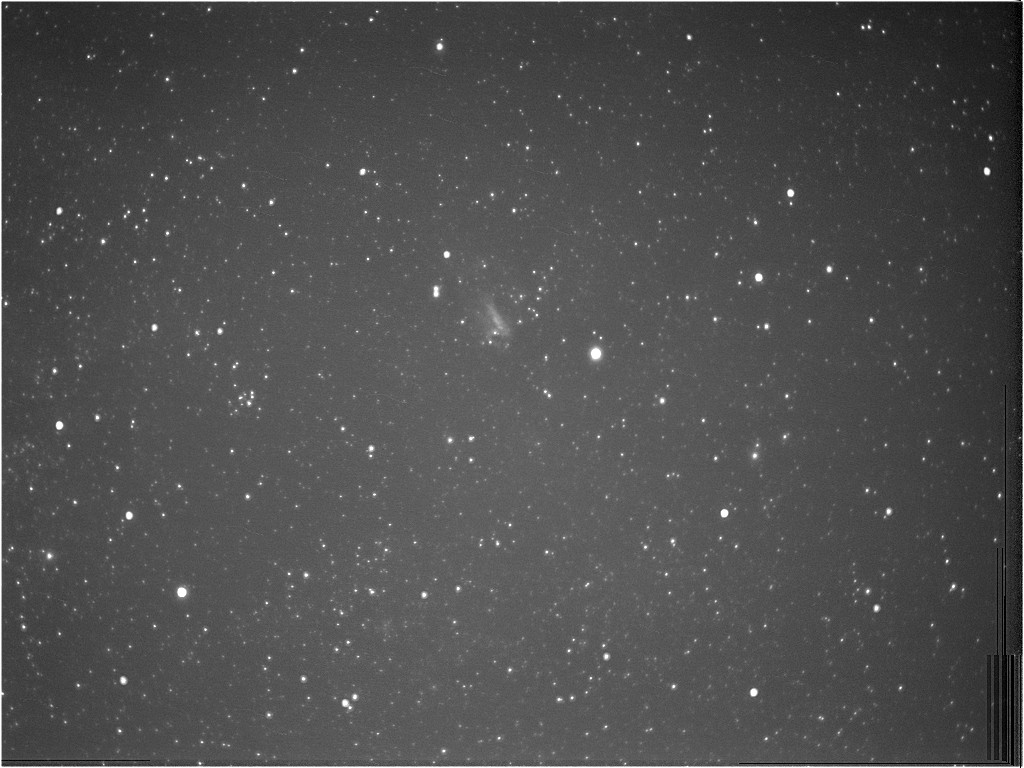


Reprocessed version:-
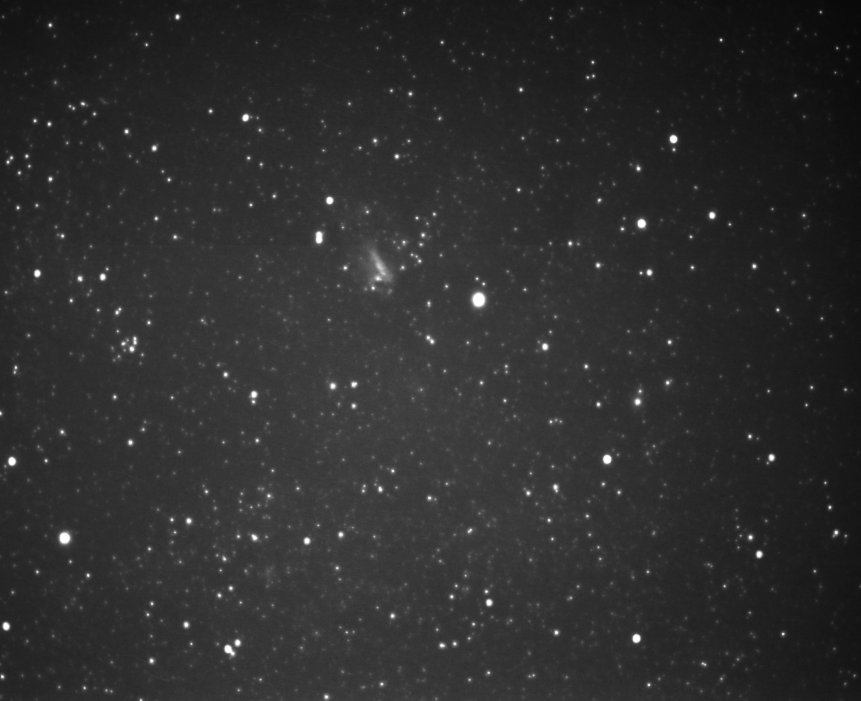


Finally, here's a M17 combined by the two above:


Remarks:

I found that I can push the exposure time a bit longer, but I was held back by the sky glow, however, the histogram from the stacked images told me that I could go further to gather more signal actually.

These series of images told me that, for urban indoor setting, maximum exposure time (30s only) of the DMK is enough to play with, by going longer the frame is going to white out. However, by using narrow band filters, I guess longer exposure time is needed and it would be far more effective.

For lazy guy like me, this is probably I'd enjoy, however. Very rough polar alignment is what I need, a compass is not even used. :-)

Short fixed tripod scanning

C mount lens, 25mm at first and then 75mm, DMK 31AF03... around Sagitarius... yet to be identified, 2s * ~80.


Additional Remarks on 30 Aug:

It should be M22.

I simply do it this way, use the widest lens (8.5mm), 0.5-1s at nearly maximum gain to scan around until I saw any non-stellar faint fuzzy, then I center it and then attach the 75mm lens, lengthen the exposure to a point so that the stars will remain pinpoint, adjust the gain to get good balance of exposure and noise, start recording an AVI, and then registax with de-rotation (dead slow), done.

Further processed and cropped version:

Saturday, August 26, 2006

20060826

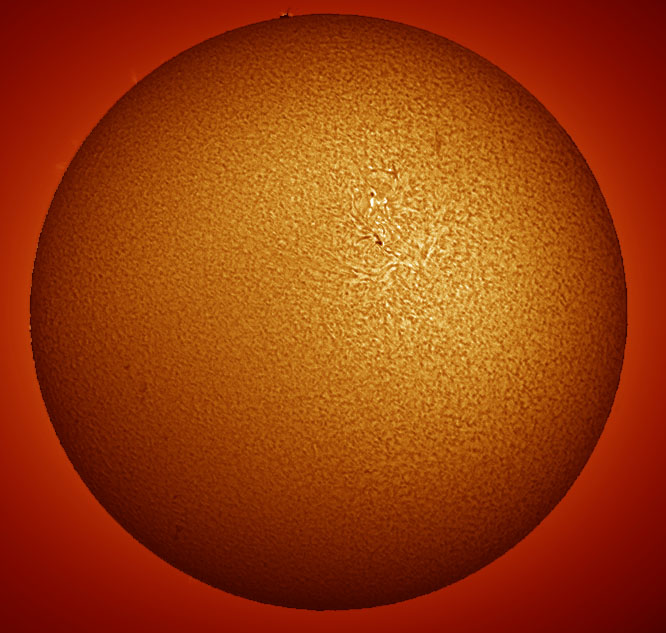
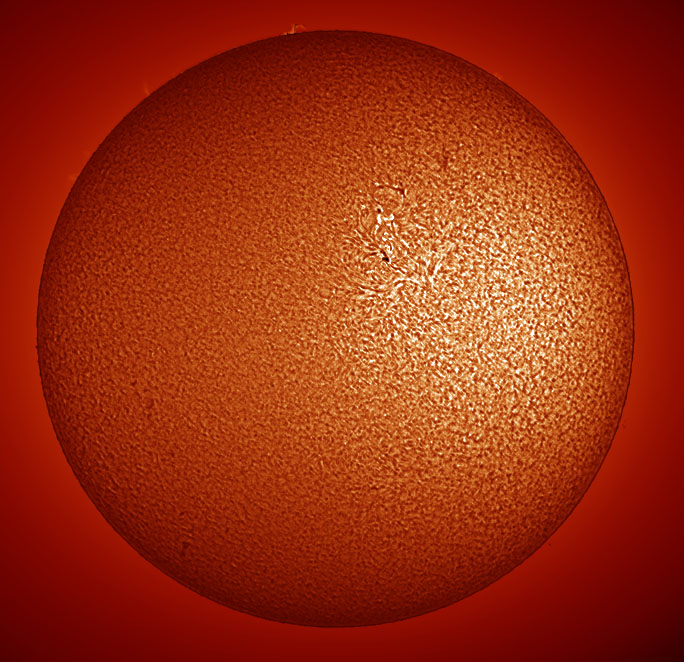
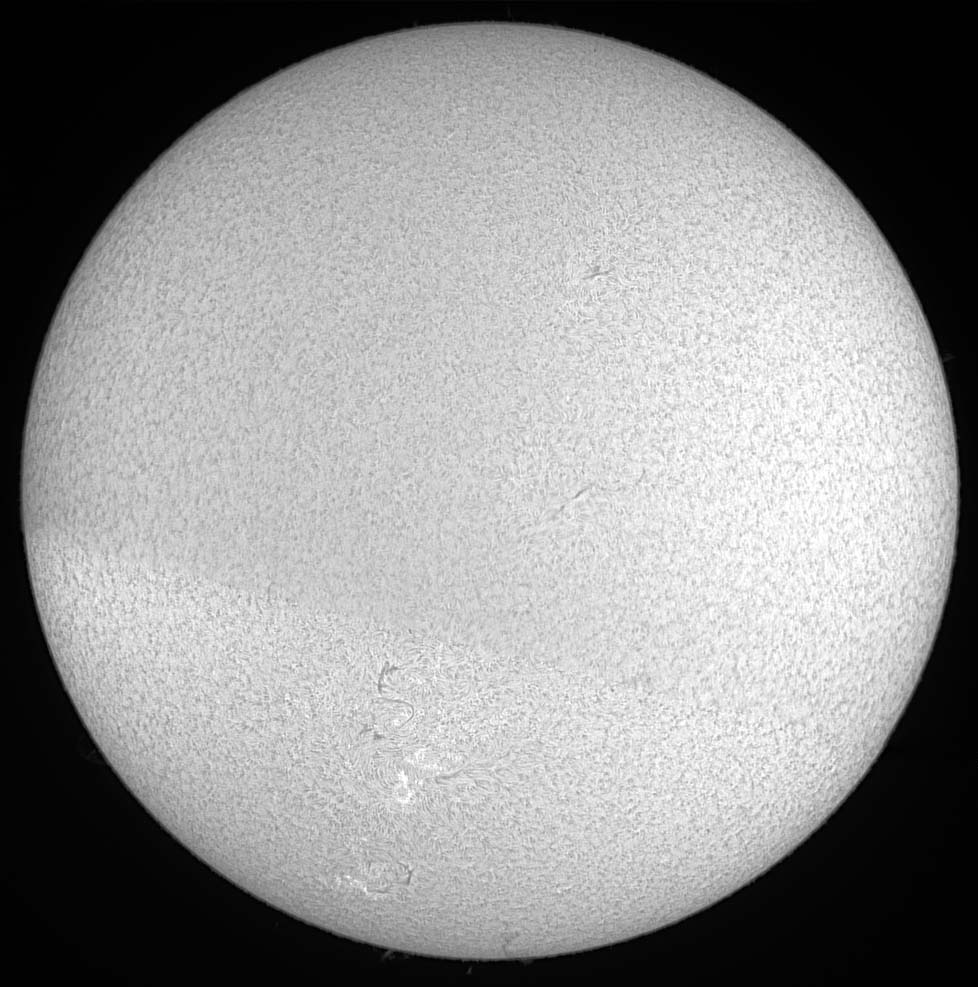
Very quick session, last less than 15 minutes from setup to tear down, hazy sky and thus the solar disc has a reddish circular patch of light around:


more images pending:


too hardly processed:-

Thursday, August 17, 2006

PST-70

WARNING: Please simply do NOT do it, since it's extremely dangerous even if you follow the following exactly and do it correctly.

Some pictures about the setup:-

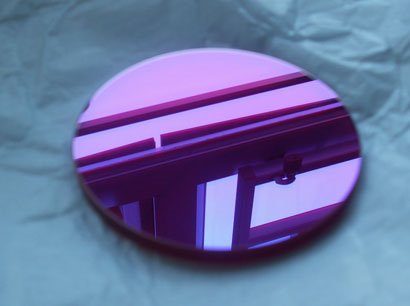
The C-ERF:


Very roughly put it in a 70mm lens cell:-


Very dirty hack to put the lens cell on my Borg 45ED custom tube using duct tape:-


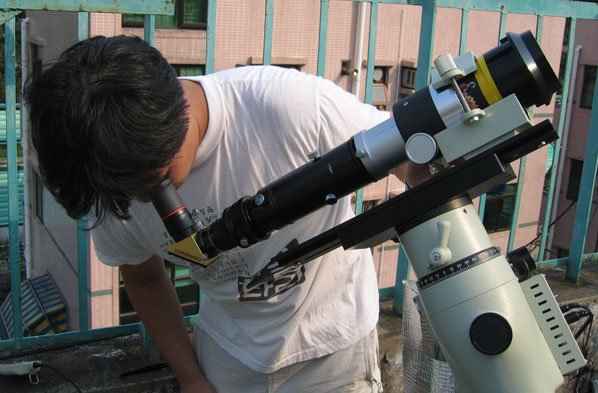
This is a special observation conducted in my friend's home, we use a 70mm C-ERF and PST etalon, BF10 to make a bigger scope setup, the result is very satisfactory:


Borg 45ED custom made OTA, duct tape hack with 70mm lens with C-ERF in cell, a chain of Borg adapters to make up the length and a BF10.

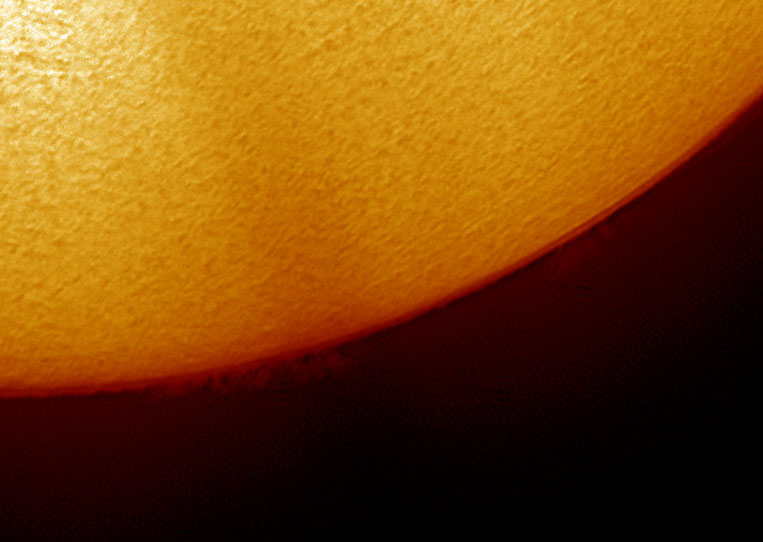
An image captured by this setup... too bad that the image scale should be pumped up with the larger aperture, but the sun is too low and even blocked after this image:

Sunday, August 06, 2006

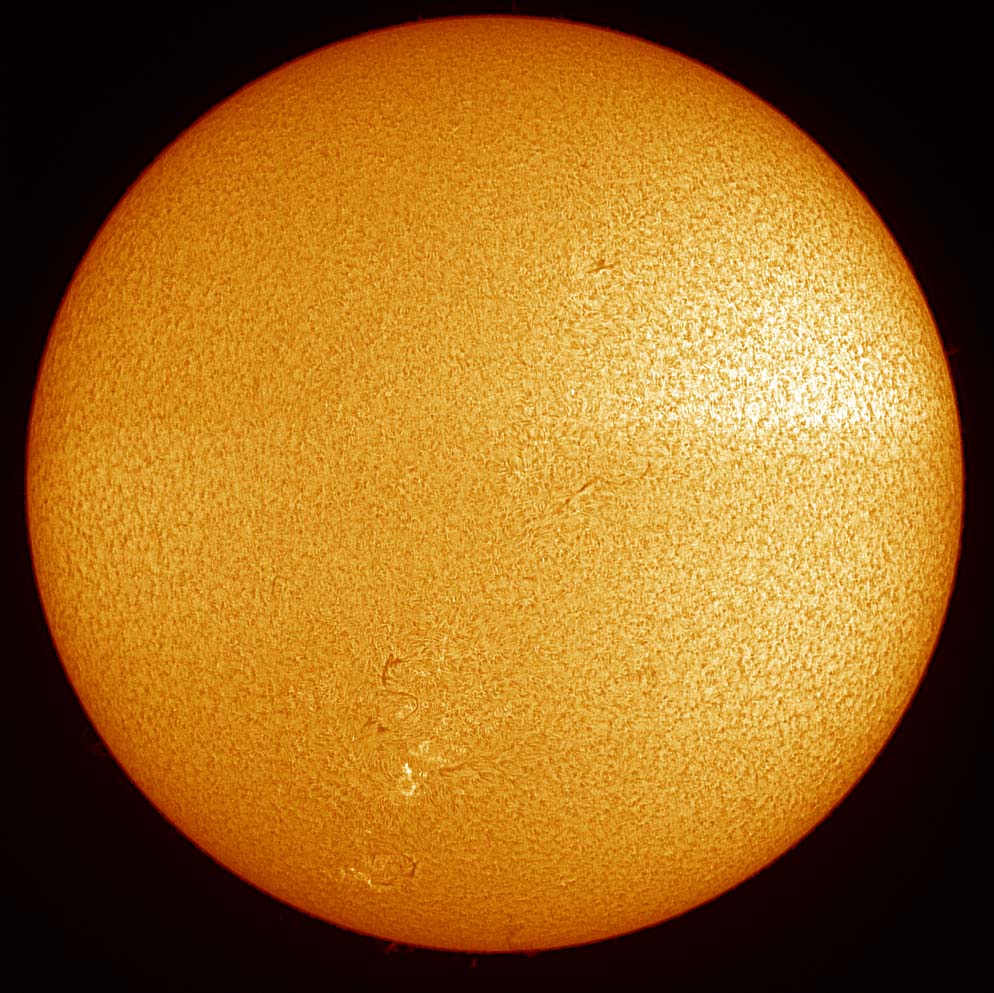
Quick solar observation

Cloudy again!

But got some gap, couldn't take any acceptable photograph most likely.

Solar disc was blank, even no prominence.


Switched to visual observation, long time didn't do it. Binoviewing, oh... wait... I saw a nice hedgerow, not too bright or too tall it's there... oh... one more V shape filament, too!


Again, human eye is the best tool... if long exposure is not needed.

(Thin) moving cloud is an enemy, your eyes are your best friend in that case.
Saturday, August 05, 2006

Quick look on the sun

Had a quick look between small cloud gap.

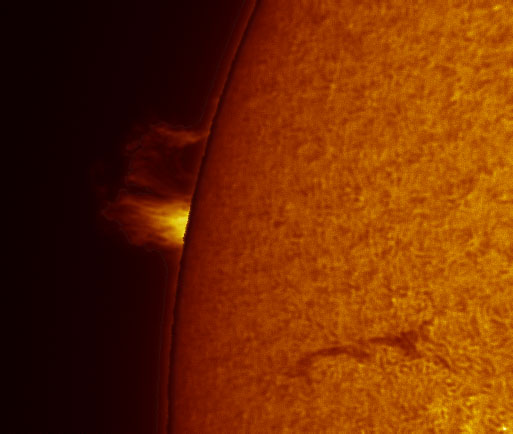
Saw a prominence loop and a blank solar disc, nothing special, cannot manage to take any shoot too.

Tuesday, August 01, 2006

A new page on indoor imaging


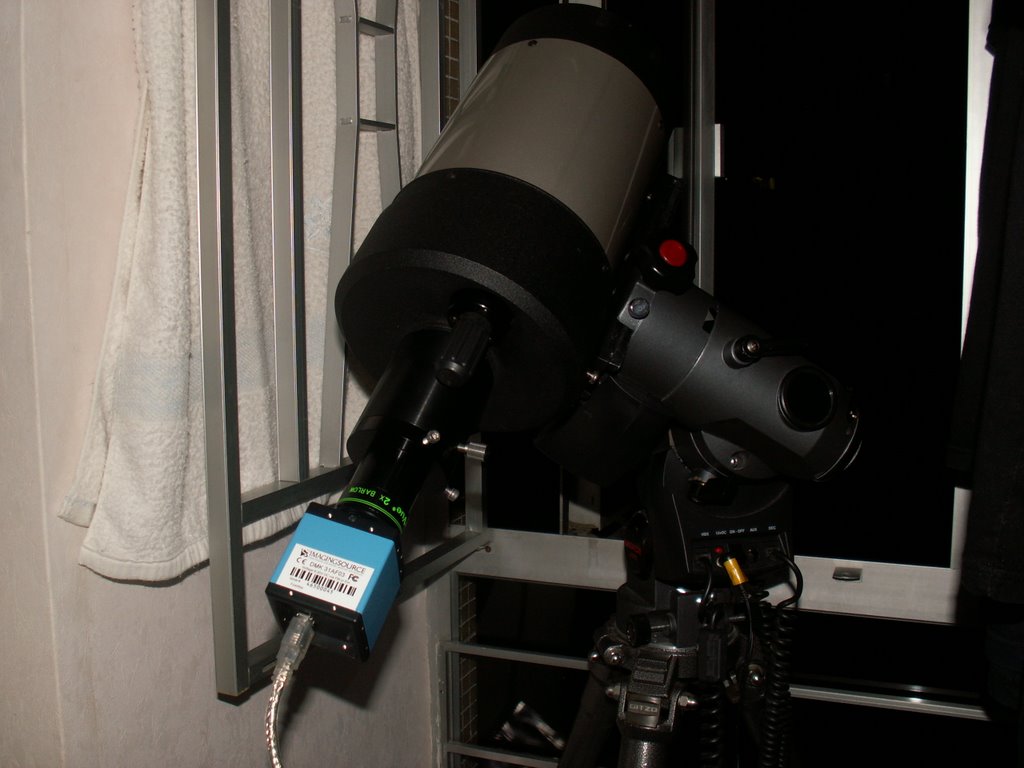
Since downsizing, this is the first time I did indoor imaging. The setup is simple, LXD55 with C5.

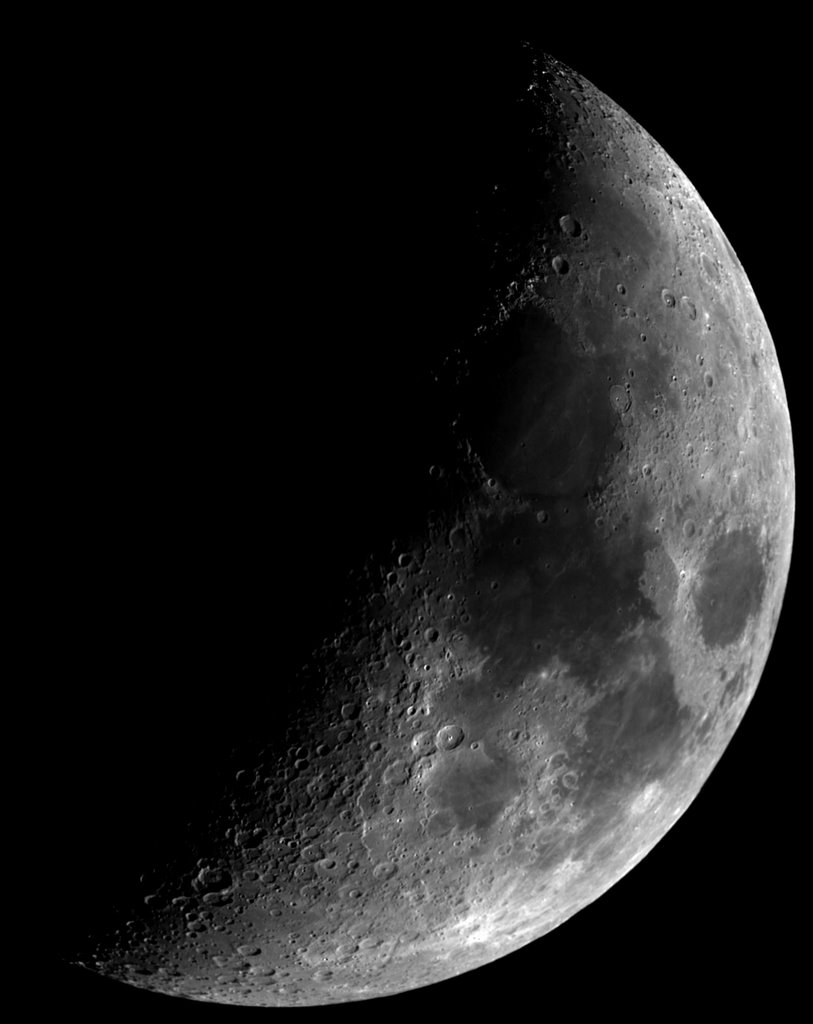
The first test is C5 at prime focus using DMK 31AF03, on the moon:


Since autostitch accepts JPG only, so the image quality is less than ideal, quite a lot of noise and useful information are removed by the lossy compression and that prevents any further processing. I shall investigate another way to do the mosaic work. For full size:

http://oldfield.sinaman.com/star/photo/moon/20060801moon.jpg

Another way to do mosaic, purely by PS, but since I'm very cheap in operating it, the result is terrible:


The second test is 2x barlows on moon, poor seeing means, oops:


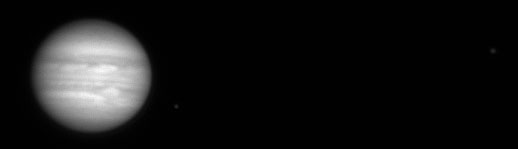
The third test is C5 on Jupiter, however, seeing was too bad that Jupiter has some random hair, so didn't get any AVI.

Sunday, July 23, 2006

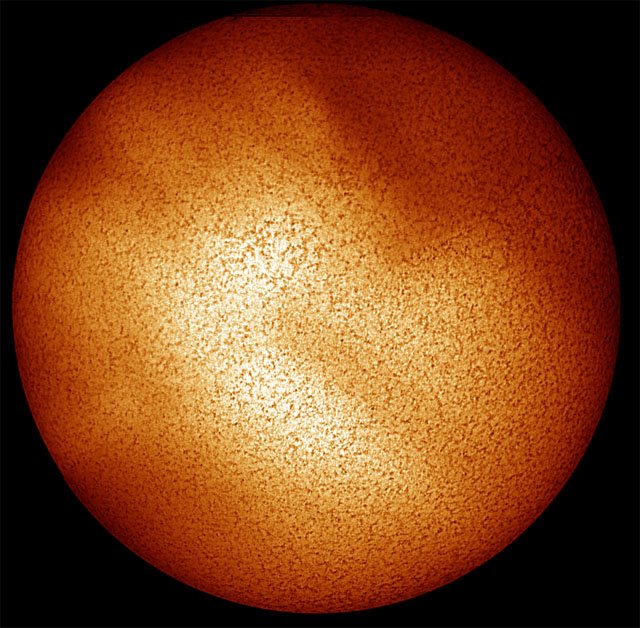
20060723 Full disc H-alpha solar

Aperture blocked, I guess only 30mm used:


Tmax is not adjusted but left in closed position without tilting, the hotspot is reduced.

==
Other notes:

On trying to locate the sun, I tried to project the sun on the wall and it does so without problem, it also shows that part of the aperture is blocked and by how much.

Saturday, July 22, 2006

20060722 Home@Walnut M4 again

Transparency is quite good again, so tried to capture M4 again with longer exposure at 18.1s each frame, low gain at 300 at first and then ~350.

Total 110 frames captured lasted for 33.12 minutes.


Redo using registax with its derotation function:-


Both the M4 and NGC 6144 is more resolved and well defined.

Friday, July 21, 2006

20060720 Home@Walnut star trail

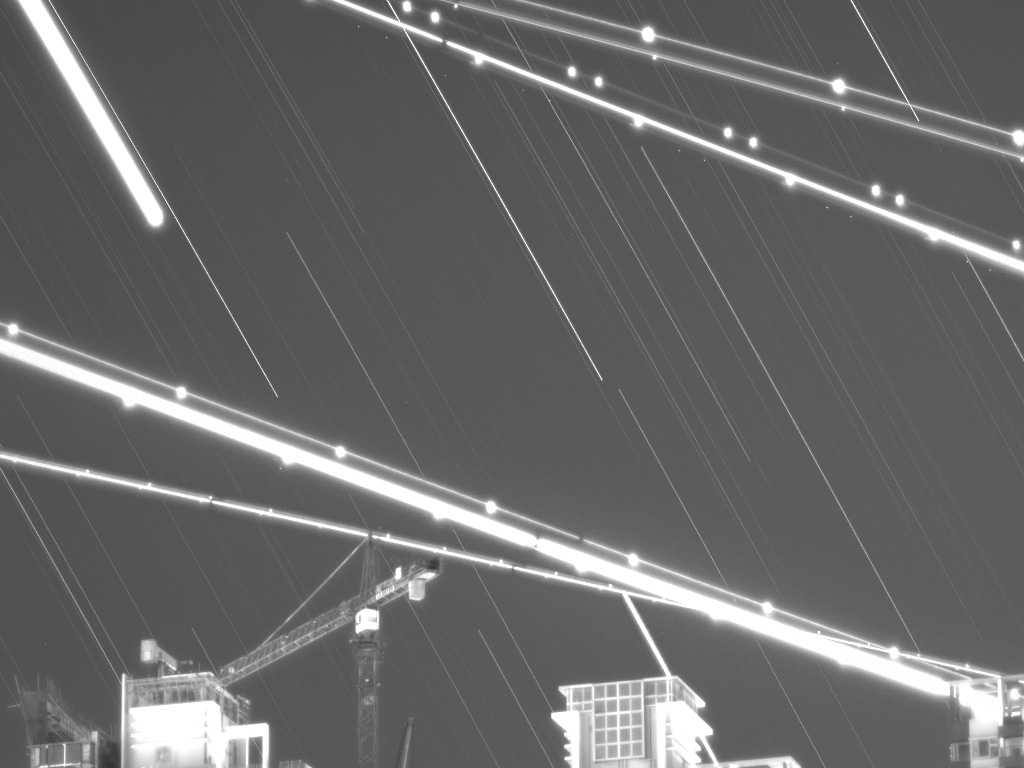
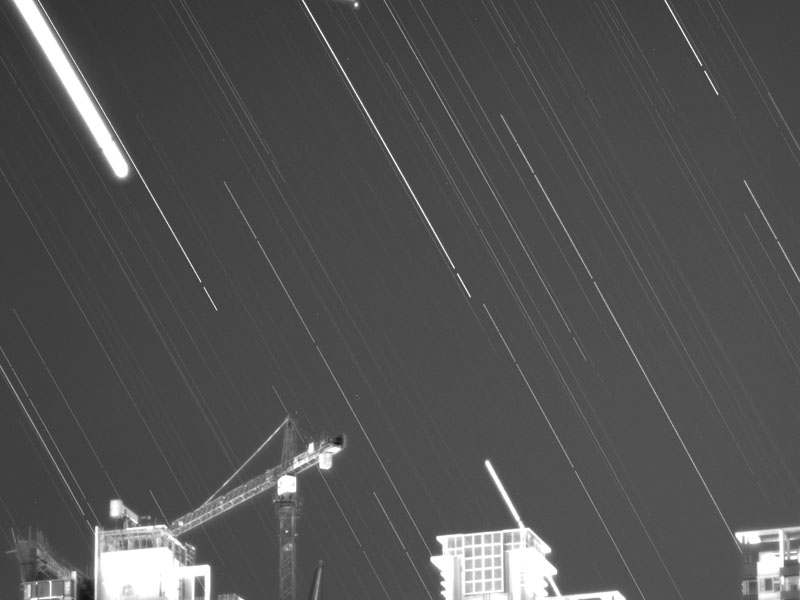
DMK 31AF03, Fujinon C mount f=25mm f/1.4, non-tracking tripod, 5.1s exposure each individual frames, ~420 frames.

Other than light pollution, we have plane pollution too.


Plane removed but gap revealed:


First time star trail! It's always fun to take it inside my urban center home!

The video:

http://video.google.com/videoplay?docid=7811356707282345005&hl=en

Tuesday, July 18, 2006

Simplest remote observation

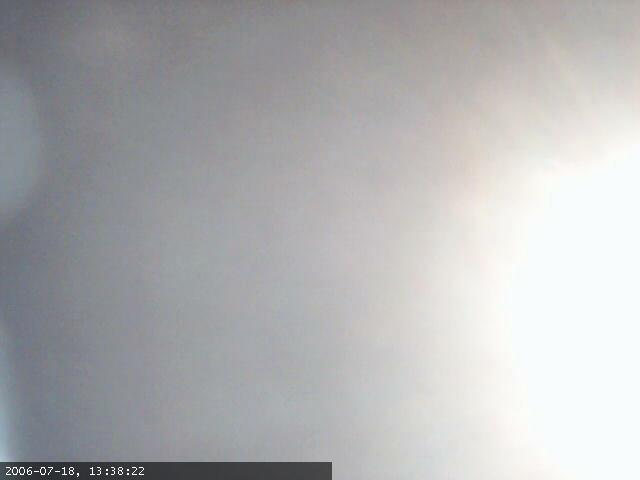
I have done something this morning in the hope to reduce the light leakage of the cheapy webcam, its lens is covered with Baader solar filter, with it's clamp mounted on the window frame.

The orientation seems bad, so nothing could be seem, blocked by the window frame too. I believe the bright patch at the upper right corner could be the sun, but it's hard to be certain.

I wonder if a very wide field lens is used in this setup, will I be able to skip the tracking/slewing part entirely, despite the small image scale.


another image taken a bit later, note that the time stamp is wrong, probably due to the fact that my home PC has its battery ran out on the motherboard, but the time difference between is accurate.


Sunday, July 09, 2006

20060709

Thin cloud + thick cloud coming and going, SM40/BF10/Ranger/DMK 31AF03:


Full disc full size:

Sunday, July 02, 2006

1st of July 2006

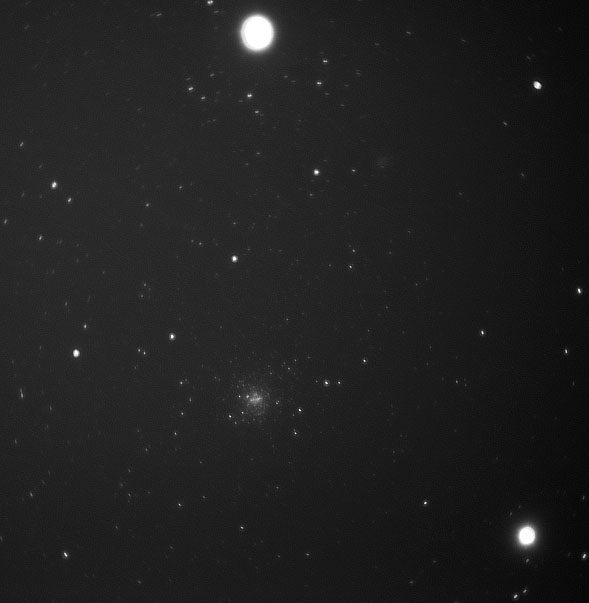
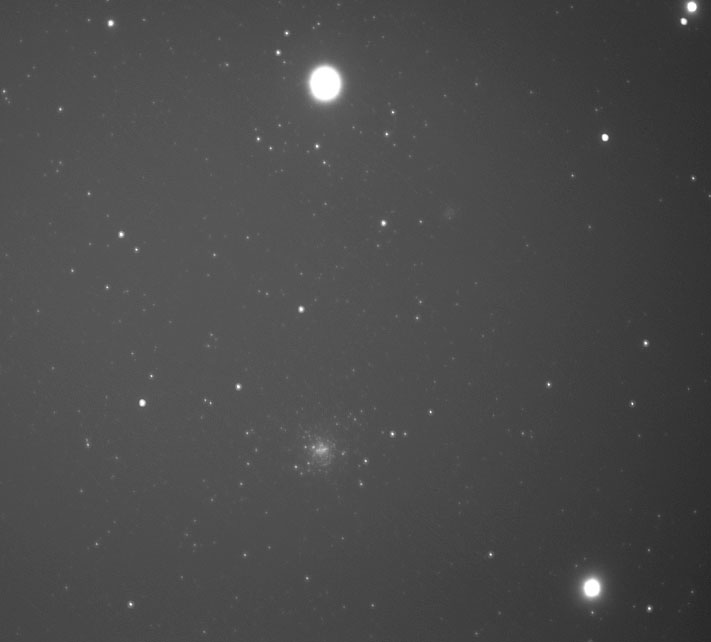
Tried to locate M4 from my home, successfully do it but since the sky is very light polluted, exposure is insufficient to reveal the detail, and the image scale is not enough to resolve stars, so nothing except a fuzzy patch of light.

DMK, 70mm f/1.8 c mount lens.


Post-remarks

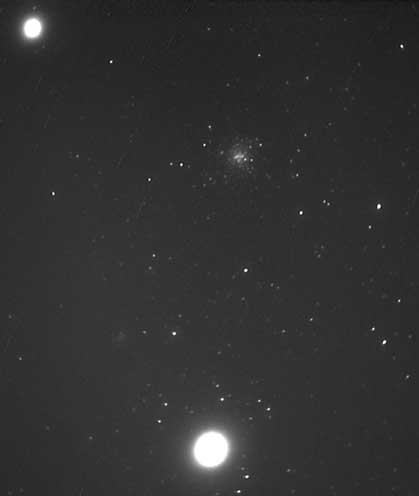
8.5s exposure, excessive cloud killed most of the 140 frames gathered, only 7 frames stacked, cropped and 80% resized. Bright Antares at the bottom and less bright star Sigma Scorpius on top left. NGC 6144 is detected near Antares as a fuzzy patch of light.

M4 is never visually observed from my home, but so easily revealed with 8.5s exposure at f/1.8!

Monday, June 26, 2006

Aggregated observational attempts

(23/6) Friday night: Did some Jupiter with Sky90, seeing very poor and Jupiter sometimes lost its shape

(24/6) Saturday morning: it's indeed the above session as above, just passed the 00:00 mark. Attempted to capture the deep sky objects near the tail of scorpius. With the widest lens, that area shows many stars even at 1/2s exposure. Far more than visible than naked eyes. Several faint fuzzy can be seen.

Centered M7 and use the 75mm f/1.8 lens, the field is nicely filled with stars of the cluster, with a little bit empty space around, super good! I'm very impressed with the sensitivity and the ease of use. Portability is also superb! Very rough polar alignment needed since it's just ~12s exposure longest. Direct feed into registax reveals on field rotation over 3 minutes of exposure with individual 8.5s exposures. Tried to center other faint fuzzy but nothing revealed, either due to poor sky or non-matching image scale.

(24/6) Saturday night: tried to capture Jupiter with C8, but failed, for I failed to point at it... either side of the meridian. So, should give up.

25/6 Afternoon: tried to point to the sun, but viewing angle was so poor. It also reveals that a remote setup is not going to be very rewarding... at least during some period of the year.

Saturday, June 24, 2006

20060624 deep sky at home@walnut

First time really do deep sky at home, with my DMK and c mount lens... M7 is so big that even a 75mm lens will max out the field, it's 8.5s * 18 frames, half of the frames (32+ original) was covered by cloud and discarded:

Friday, June 23, 2006

20060623 Jupiter

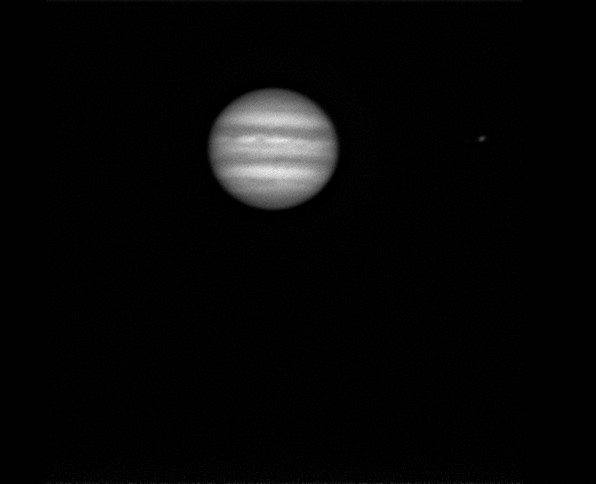
Sky90 + 5x Powermate at 2221 HKT:


One more, stacked from 1500+ frames

Friday, May 26, 2006

20060526

Sick leave today, just woke up, had some noodle and did it.

Full disc, poor seeing blur part of the image, also the stitchng is harder with highly variable seeing:


A big prominence:


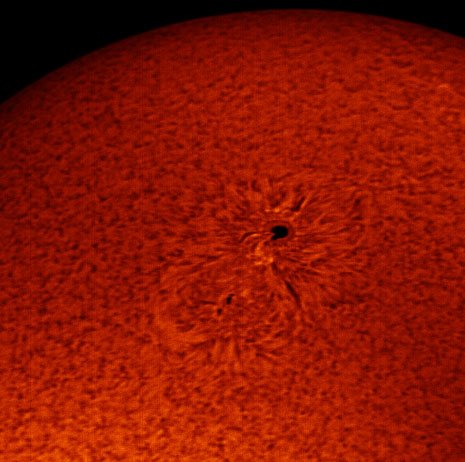
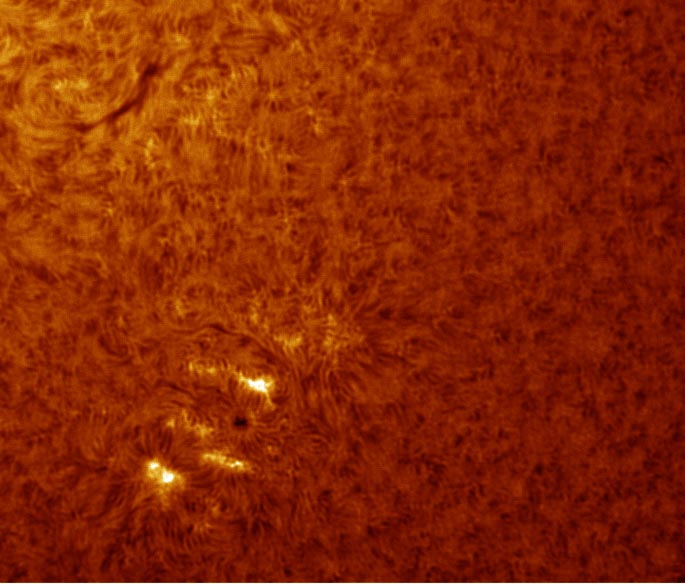
AR866:


Demonstration of seeing change during a very brief moment:

Monday, May 15, 2006

20060514

First attempt, registax two AVIs and then stitch them together:


Reprocessed by common alignment point method in registax, to improve the non-uniformity in the first stitching attempt:


False color:

Saturday, May 13, 2006

Jupiter

Sky90, 5x powermate, dmk 31af03, poor seeing, so so transparency.

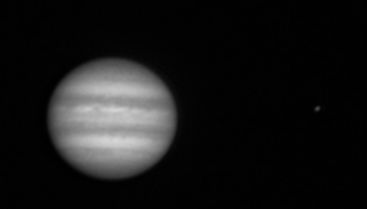
this one is not taken with 30 fps, a bit overexposed:


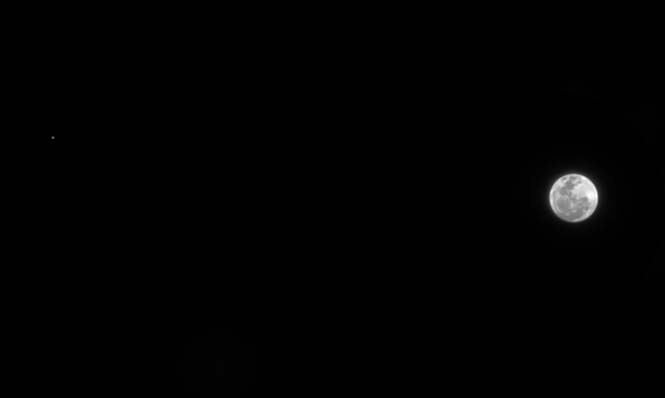
Jupiter was (quite) close to the moon, Fujinon 25mm f/1.4 c-mount:


The cleanest of the batch: