Monday, January 25, 2016

20160125 Winter Sun (冰天的太陽)

Armed with a new focuser together with a clear sky, there is no reason not to shoot.

It's record breaking cold in Hong Kong, at 3 degree Celcius and strong wind, it's not bad to be able to shoot indoor.

First up is sun taken with crop mode, note the Newton's ring... 1403 (GMT+8):-


On using full chip mode, I could drift the sun around while capturing and that effectively remove the newton's ring, it's also much higher in resolution.  1407 (GMT+8):-


Click for full size.

Monday, January 11, 2016

A little adapter designed and 3D printed by a local buddy Jack Wong


The Skywatcher Sky Adventurer mount has a small polar scope illumninator, but then it has to be taken off before attaching the dovetail rail or a ball head.  It is not very convenient in the sense that 1) when the mount was moved accidentally, polar alignment could not be done without taking off everything 2) when attaching the telescope or camera, the setup might moved and then polar alignment has to be redone.

To solve this problem, a local buddy designed a small orange adapter and then 3D printed it so that the polar illuminator could be attached to the dovetail rail!

Sunday, January 10, 2016

JMI NGF-CM w/DRO

I've been looking for a NGF-S or NGF-CM, but in vain.

Too great that I came across such a deal in CN classified, and better yet, the seller agreed to sell me because I had been active and helpful in CN!  It's not unexpected since there involves extra effort to ship overseas.

I'm excited, you know, this deal seems to be prepared for me.  That focuser didn't even come with a telescope adapter, not even for SCT, but I had one for my Ranger!

Solar imaging quality could be improved finally...

Finally got the tracking number, and it just left US last night:

cw796258549us

expect to arrive Hong Kong in 6-10 days, i.e. earliest arrival could be Monday.

Saturday, December 19, 2015

20151218 Moon

Seeing was no good again due to the strong wind, it's not too bad as it will be getting warmer in a few days.

The moon was going to the edge of my observation window and thus I could only get this one, resolution lowered.


2018 (GMT+8), Ranger at prime focus.

Wednesday, December 16, 2015

20151216 Sun

Winter finally comes! Having said that, it means 16 degree Celcius only... it's going to drop to around 13 tonight, so wind is getting strong.

Rather nice transparency at 6/10, seeing 1/10 as created by the wind....

Reducer lens always inside the BF10 unless stated explicitly.

First up is an image taken with ROI feature, frame rate goes up to over 40 fps, but given the very poor seeing, it does not help much.  Taken at 1433 (GMT+8):-


This is what it called "skip" mode, full resolution is not used by skipping some pixels, which results in higher frame rate, but with the same field of view.


By using full resolution, the frame rate is lower and as you will see from below, the image is blurred far more by seeing.


So now the "skip" mode is even more useful than ROI. 

I found that ROI is not well implemented by SharpCap, it is not user friendly at all, one should be able to draw the ROI on screen instead of setting offset and the frame size!

Wednesday, December 02, 2015

The Dark Cube at Work: 20151202 Sun

After some experiments, the Dark Cube now works.  A reducer was used in order to fit the whole solar disc into a single frame, given it has 5M pixels, making it a bit small is still fine enough.  The reducer lens is just a 30mm binocular objective, dropped into the barrel of the BF10 so that it was sandwiched between the blocking filter and the camera.   The focuser drawtube of my Ranger was fully retracted, and the fine helical focuser has enough travel.


Seeing 3/10, transparency 2-3/10 with cloud around, so I only got around 200 frames to stack.  The T-max/RichView could be tuned more carefully if there was less cloud.

AR2458 on the left, a few small prominences around.

Taken at 1409 (GMT+8).

Tuesday, November 24, 2015

The Dark Cube: new monochromatic 5mp CMOS camera

This is the second light, I've placed a simple convex lens between the BF10 and the camera nosepiece, this is effectively a reducer.

The result is that, the chip can hold the smaller solar disc with ample spaces so that I could move the sun around while imaging.

I've set sharpcap to get 600 frames, i.e. more than 2 minutes at around 4-5 fps with full 5mp resolution.  Since the solar disc was moving around, the Newton's ring was averaged out and the dust removed too.

The file is 8.5G in size!  Transfering the file from my tablet to my PC took nearly an hour via wifi!  Crazy indeed, and I've tried to move that file via a micro SD card but then the system complains that the file system on the SD does not support that large a file! 

Registax is moving slowly...


The time stamp was not from the camera and not from the driver too, as the manufacturer said, I've to double check with Sharpcap to see if I might turn that off.  A bit annoying...

The image was a bit soft, I suspect it could be a result of:

1. bad focus, you know, I'm effectively imaging at very big image scale despite I'm working at less than around 400mm since the pixel density is oh so high!

2. poor seeing, again, due to the big effective image scale... also the relatively long capturing window will blur fine detail.  I shall check.

In summary, if I were to take a fine full disc shot, use full 5mp resolution.

If I were to capture fine high resolution detail, I should go for ROI, and that will allow much faster frame rate and then, I could freeze seeing.

Monday, November 23, 2015

New monochromatic camera, setting up

Got a new one, I guess not many people use it, it's based on CMOS which is quite risky.  I don't know if it has Newton's ring... if there is, I will use the drift and average method.

It has 5M pixel so that I no longer need to go for barlows and the chip is quite big so that mosaic work is minimized.

The problem becomes frame rate due to the large volume of data.

With my Windows 8.1 tablet, it could go up to 5+ fps when saving to the internal SSD... it drops to lower than 1fps when saving to a good micro SD card, but then I know it's due to the internal card reader rather than the card itself.

When my Eee PC, the frame rate is slightly less than 3fps....

So, the tablet will be used for imaging, and I will have to free up space from the internal SSD to store the video clips.  I was thinking to remove the android partition which I seldom use.  But then I will want to make a partition dump as backup.

--

First light, since the frame rate is low, it could be hard to gather too many frames to stack, for example, to stay within a 100s time window, we could have only around 500 frames to play with:-


Note that the camera driver will insert time stamp on the upper left... !  Anyway, most of the newton's ring is averaged out except on the upper right area... I shall explore way to improve.  The amount of detail is nice, and we don't need to go for mosaic.

--

To free up extra space for AVI storage, I have decided to erase the Android of my Teclast.  However, I reserve the right to go back later, so I only remove the user data partition which is around 16G in size.  Before formatting that partition, I use:

http://www.macrium.com/reflectfree.aspx

to backup the partition image, so when I need it again, I will restore that particular partition.  Actually, I have another Android tablet so I will not use that on my Teclast.  And in fact, the Teclast Android is buggy, for example, the wifi password would not be saved and I will need to enter it every time after rebooting.

By removing that partition and reformatting to NTFS, we could use it for image capturing but then I found that the drive letter than I assigned via Computer Management (Windows 8.1) will be lost every time I reboot.  After some investigations, I found that partition was set hidden.  To unhide it, use diskpart commandline to unhide... select disk, select partition, partition detail, attribute volume set/clear hidden

too cryptic?  not already for old age IT guy.

--

To remove the Newton's ring, I will try to DIY a tilting device and there are some C mount extension tube from taobao, and they might be good candidate for the modification work, and it might be a good idea to sandwich a small reducer lens between the tilting mechanism so that I could have full disc in a single shot!

Before making the tilting adapter, I will try to image the sun without tracking...  i.e. just let the solar disc drift from one side of the CMOS to the other side slowly, and hopefully, the rings will be average out.

Wednesday, November 18, 2015

Canon FD 300mm f2.8 conversion: internal reflection

When using as a telephoto lens, I found internal reflection if there is bright light source around.  With careful inspection, it was due to a silver ring inside the adapter chain.  Therefore, I've blackened that ring, and now the problem was solved.

Tonight, I tried to use it again on the moon, and the result is very good.

Then, I placed the EOS-1.25" eyepiece adapter in, and I will need to insert a diagonal between the lens and the diagonal, the internal reflection issue comes back!  I soon realized why, it's because the silver barrel of the barlows!  On shielding it with black cover, it's all solved!

It's a good astrograph, it's a good day time telephoto lens.  However, it's not so good as a telescope for:

1. a diagonal has to be inserted, and thus, it has effective focal length of more than 900mm... so it's no longer a wide field instrument.

2. for high power observation, it's not wide to use a f2.8 objective

Therefore, I am going to sell it.

Monday, November 16, 2015

Replacement camera for my Lu055M

Since the death of my Lu055M, I had been trying my ASI 120mc on H-alpha imaging but the result is acceptable at best. I had an ASI 120mm before, but the newton's ring is too annoying so that I sold it soon. The image taken with a 120mm is great, however. I was impressed from the image on the real time screen, not to say the stacked version! I had been looking at those CMOS camera again, and I had one in mind and it features a CMOS sensor which should have newton's ring problem! The chip size is bigger, big enough to fit in the whole solar disc with my Ranger and it has 5 mega pixels and so I have no more need to make mosaic. With my Ranger which has 480mm focal length, the solar disc image would be smaller than 4.2mm but of course, with the prominences at the edge and it might exceeds the size of the CMOS sensor a bit. To elminate the newton's ring, the simplest way is to let the solar disc to drift round the sensor while capturing. Flat field might not work since the pattern of the newton's ring might change rather rapidly even if the solar disc moves a little bit in the field. Let me see how it works out, and the bottomline is that, it's going to be a fine lunar camera.

Saturday, November 07, 2015

Concept: Motorized focuser for my Ranger

Formerly, I was using a NGF-S and then upgraded to a NGF-CM. But those were sold due to the exit from solar imaging, and after getting the Solarmax II, I had been looking for a JMI focuser, but so far I could find any good deal. I had bought a Event horizon focuser but then it was incompatible with the old interfacing adapter. With the recent jump in shipping cost, and the lack of good second hand offering, I am thinking to motorize the original helical focuser of the Ranger. Going up to 2" for the Ranger is not very attractive and that also lowers the motivation towards JMI focuser, too. So I will be looking for a timing belt (同步皮帶), and a suitable timing pulley (同步輪/同步皮帶輪) and DIY suitable mounting adapters. The mechanism should be better be removable, and I could engage and disengage the motorizing mechanism too. Let's see how to move on. -- At the mean time, I will to use my adapted Canon FD 328 for visual purpose, see if it is acceptable or not for wide field scanning and high power observation.

Wednesday, October 21, 2015

Testing of the Canon FD 300mm f2.8

This is not a good test, but this is what I could do at the moment.  Dark sky should be where it shines.

The target object is the moon, and I've used a tele vue 5x before a star diagonal to push the power up...


I found that if I keep on indoor light on, the image will be totally washed out.  It seems like the lack of baffling is the killer of the contrast.  But for deep sky imaging at darker sky, it should be no problem?

Wednesday, October 14, 2015

20151014 Sun

My daughter was sick leave at home, so I was there with her.  Chance to pull out my solar gear and captured this one:


Color cam is not really for H-alpha imaging... again resolution killed by the bayer filter matrix of the ASI 130mc, got to buy a new monochromatic camera soon!  Seems CMOS sensor with rolling shutter is to be avoided?

AVI converted to older format via virtualdub and then processed with Registax 5, downsized to reduce the effect of the artifacts.

Friday, October 02, 2015

20150929 Sun (very poor sky)

Just stacked, and a waste of time to further process.


1524 and 1525 (GMT+8), prime focus.  ASI 120MC.

Tuesday, September 29, 2015

20150928 Sun with ASI 120mc

Yes, you read it right, and I'm using a color camera to do H-alpha since my monochromatic LU070M was dead.

This frame shows the problem, the bayer color matrix ruins part of the resolution... 


As a work around, I downsize the images and here are the results:-

First up is a prime focus shot, taken at 1539 (GMT+8):-


Next is an overexposed prime focus shot, at 1542 (GMT+8):-


We have a huge prominence stretching all the way out and go back to the solar limb, what a sight!

Finally, a 3x close up:-


which is the downsized frame of the very first image of this page.

My Lu070M is dead

Today I found that my Lu070M is dead, I try to fix it but in vain.

Computers could still detect its presence, its serial number is shown too.  But then the captured screen remains all black, not even noise was shown.

I wonder if I should buy a ASI 120mm again or to let the Solarmax go.  I'll wait to see if I could find something good and cheap, first.

Meanwhile, I'll use my ASI 120mc at the time being.

Wednesday, September 23, 2015

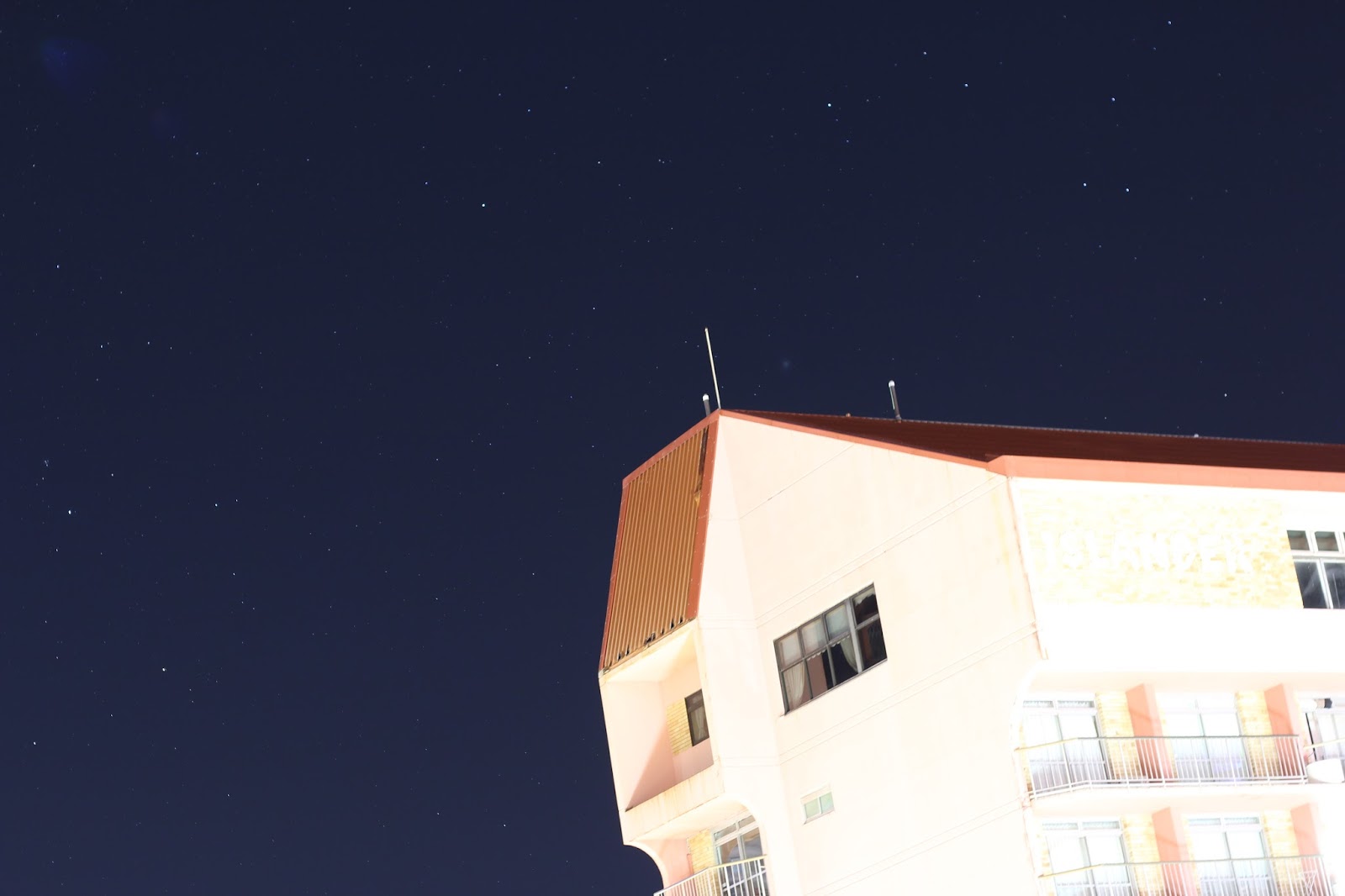
Australia trip first shot 20150807 Gold Coast Surfer Paradise

This is a simple shot from the balcony of the hotel room:


Note the Omega globular cluster!

I did take longer exposure, but it didn't help much, so this one is left as a record.

A clean sky is half way to success, it's bright there but you could still do something.

20150923 Sun

Cloud moving around, so I only managed to get one single shot as below:


1400 (GMT+8), prime focus, i.e. 480mm.

Thursday, June 04, 2015

Teclast x98 Air

It's a Chinese Windows 8.1 tablet, featuring a OTG port.

I have tested last night, ASI 130mc could be used without problem.

However, Lu070m failed probably due to insufficient power from the OTG port.  A powered USB hub should work, but I got to test again.

This could be perfect for webcam imaging and guiding purpose.

--

To give a little bit more background, it features dual boot so you could choose between Windows 8.1 and Android 4.4.4 during startup.  There is no hot swap between two systems unlike some other Chinese offerings.

The 64G storage was split around half-half, with the Windows side having slightly more memory.  After installation of Office 2013 (bundled for free), SharpCap, ASI and Lumenera drivers, Stellarium, ASCOM Platform, PhD Guiding, BibleWorks, VLC player, Dropbox (occupying around 6G of space), I got around 9.5G space left.

I will need a buy a fast 64G micro SD for image capturing.

--

Installation Notes of ASCOM platform:

It required .NET 3.5 but Windows 8.1 has .NET 4 instead.

When I try to install .NET 3.5, the system refuses to install and after applying all the Windows Update, it success... but then it eats up a few gigabytes too.

--

Finally, I bought a 32G SD with 48M/s speed.  I will try to use it solely for imaging purpose, and upon capturing, I can take the card out, and process the files from my PC.  32G ought to be enough for one or two imaging sessions.

And then I also bought a OEM bluetooth keyboard and mouse, to be used with the tablet.  It's nicely designed so that it makes the tablet notebook like!  Best of both world, a small portable notebook, a tablet which can run all my astronomy applications, guiding, image capturing, processing, plus the android side for daily work.  The added bonus is the capacity to run Bible Works!


--

To further simplify the whole thing, I've bought a OTG cable which allows direct connection to the camera:


Friday, May 08, 2015

Final form of the converted Canon FD 300mm 2.8 in EOS EF mount

This is the adapter used. It consists of a 77-58mm step down ring, and then a 58mm focusing tube, plus a 58-42mm step down ring. The flange distance is then adjustable to suit different situations.

A 58mm tube is used instead of a 42mm tube which I previously acquired, to avoid any vignetting.  A M42 to EOS EF ring with electronic focus confirm is used, it is glued together to ensure proper orientation of the tripod socket.