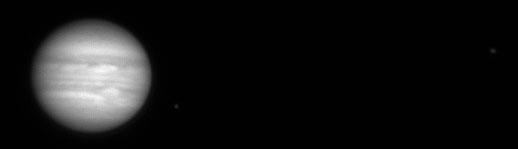
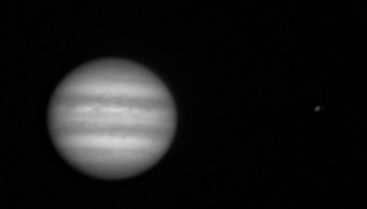
(23/6) Friday night: Did some Jupiter with Sky90, seeing very poor and Jupiter sometimes lost its shape
(24/6) Saturday morning: it's indeed the above session as above, just passed the 00:00 mark. Attempted to capture the deep sky objects near the tail of scorpius. With the widest lens, that area shows many stars even at 1/2s exposure. Far more than visible than naked eyes. Several faint fuzzy can be seen.
Centered M7 and use the 75mm f/1.8 lens, the field is nicely filled with stars of the cluster, with a little bit empty space around, super good! I'm very impressed with the sensitivity and the ease of use. Portability is also superb! Very rough polar alignment needed since it's just ~12s exposure longest. Direct feed into registax reveals on field rotation over 3 minutes of exposure with individual 8.5s exposures. Tried to center other faint fuzzy but nothing revealed, either due to poor sky or non-matching image scale.
(24/6) Saturday night: tried to capture Jupiter with C8, but failed, for I failed to point at it... either side of the meridian. So, should give up.
25/6 Afternoon: tried to point to the sun, but viewing angle was so poor. It also reveals that a remote setup is not going to be very rewarding... at least during some period of the year.
Monday, June 26, 2006

Saturday, June 24, 2006
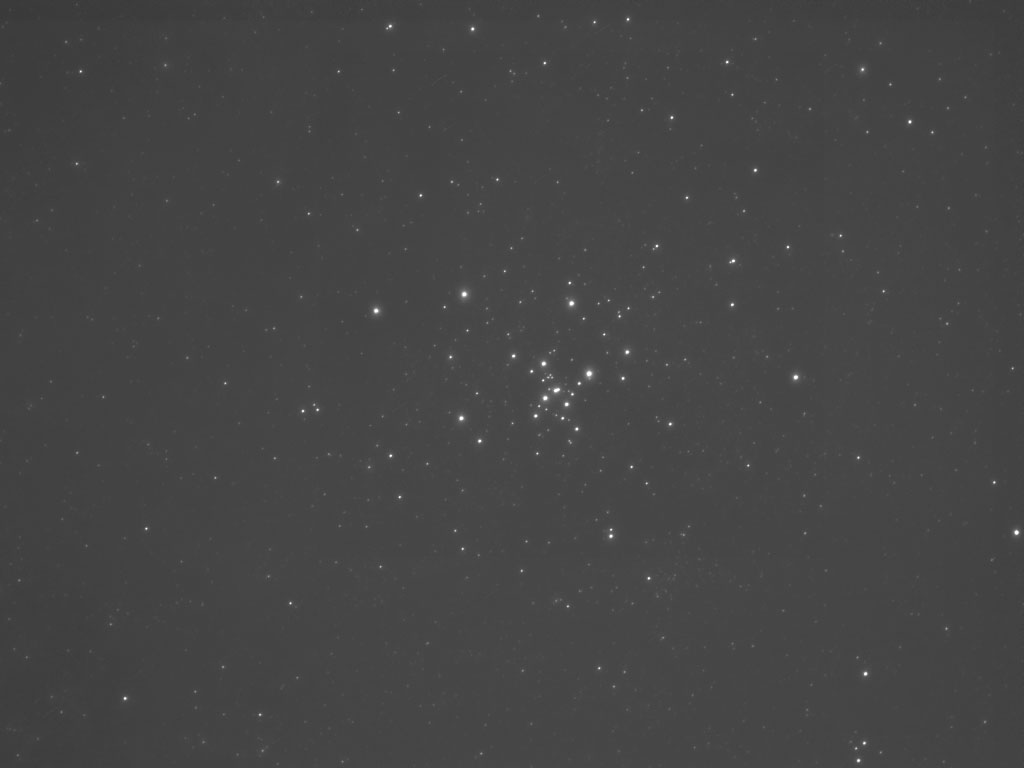
20060624 deep sky at home@walnut
First time really do deep sky at home, with my DMK and c mount lens... M7 is so big that even a 75mm lens will max out the field, it's 8.5s * 18 frames, half of the frames (32+ original) was covered by cloud and discarded:

Friday, June 23, 2006

Friday, May 26, 2006
20060526
Sick leave today, just woke up, had some noodle and did it.
Full disc, poor seeing blur part of the image, also the stitchng is harder with highly variable seeing:

A big prominence:

AR866:

Demonstration of seeing change during a very brief moment:

Full disc, poor seeing blur part of the image, also the stitchng is harder with highly variable seeing:

A big prominence:
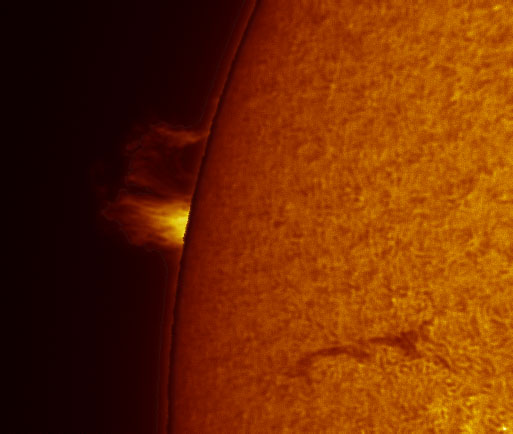
AR866:
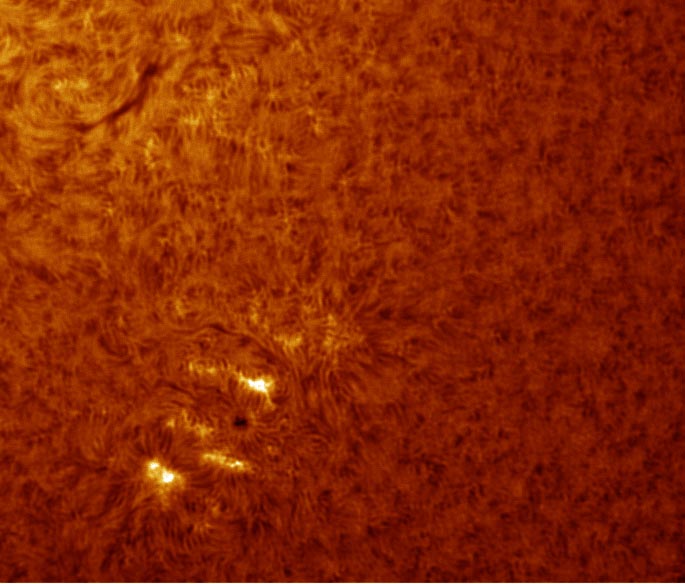
Demonstration of seeing change during a very brief moment:

Monday, May 15, 2006
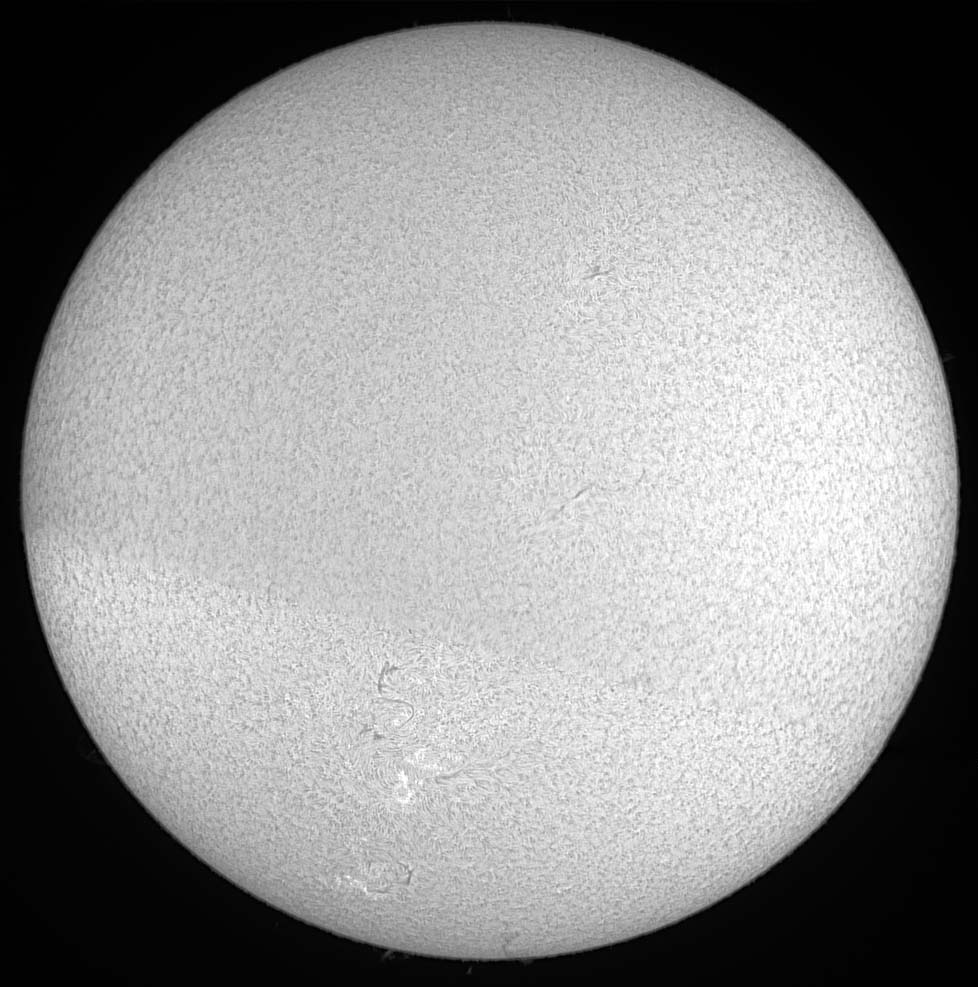
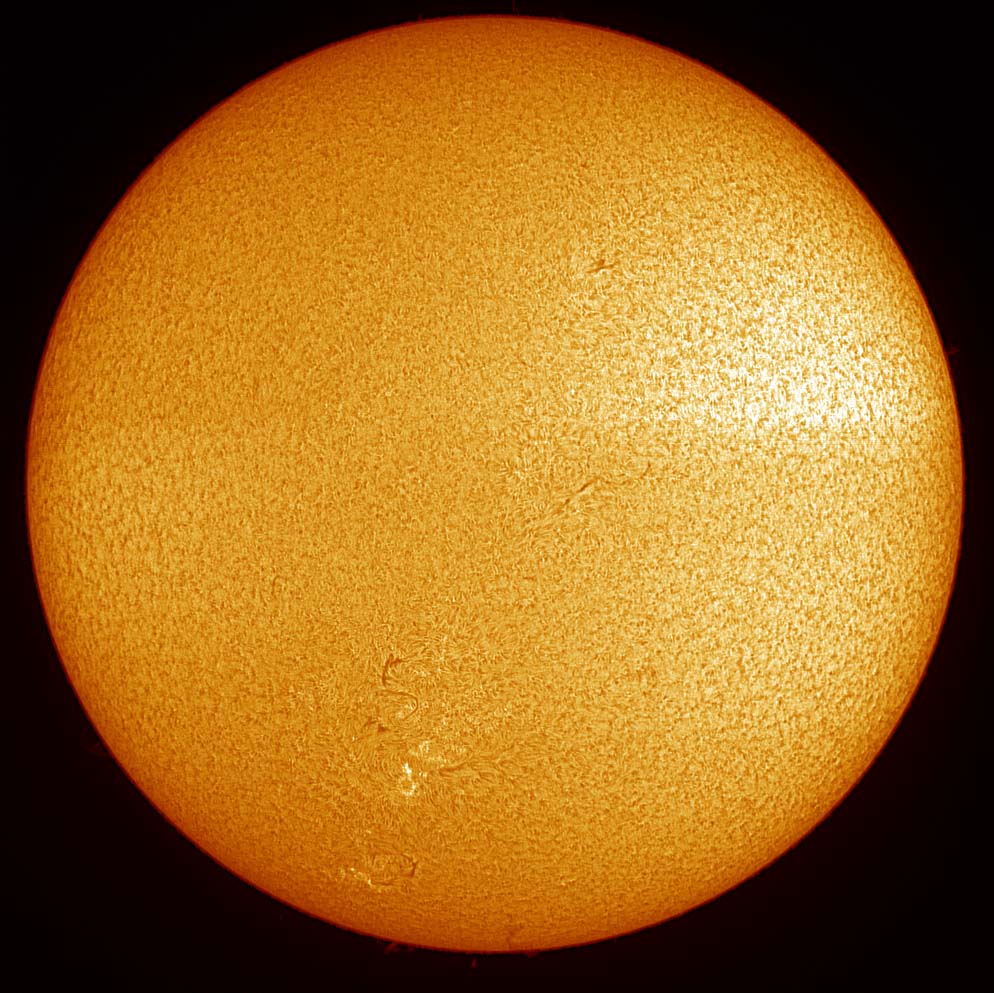
20060514
First attempt, registax two AVIs and then stitch them together:

Reprocessed by common alignment point method in registax, to improve the non-uniformity in the first stitching attempt:

False color:

Reprocessed by common alignment point method in registax, to improve the non-uniformity in the first stitching attempt:

False color:
Saturday, May 13, 2006
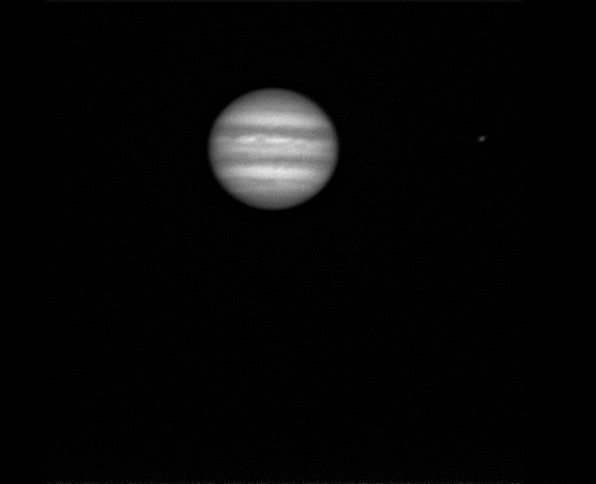
Jupiter
Sky90, 5x powermate, dmk 31af03, poor seeing, so so transparency.
this one is not taken with 30 fps, a bit overexposed:

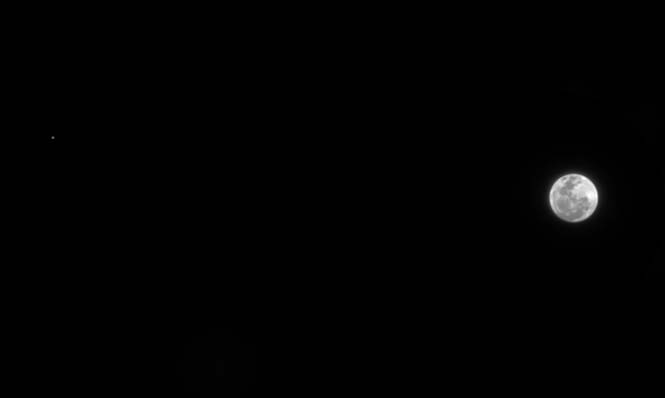
Jupiter was (quite) close to the moon, Fujinon 25mm f/1.4 c-mount:

The cleanest of the batch:

this one is not taken with 30 fps, a bit overexposed:
Jupiter was (quite) close to the moon, Fujinon 25mm f/1.4 c-mount:
The cleanest of the batch:
Wednesday, May 10, 2006
Short lunar observation again
20060510 2251-2301
Did a very short lunar observation last night, transparency was superb in Hong Kong standard, seeing sucks however since cloud are moving very fast, but I believe it's of low frequency type.
High frequency seeing would be bad for high resolution imaging, however, low frequency seeing would be bad since they would distort shape of the features. Anyway.
Equipment was LXD55 roughly aligned without anything (just gut feeling), Sky90 with 5x Powermate, DMK 31AF03.
Some notes for future reference: I can use the EQ mount inside home for the moon during these days, just a matter of timing, just put the motor compartment out of the way in order to steal more time before forcing meridian flip. Also, I noticed that the Jupiter would be also in the way around 1:00a, so time to be prepared. If the EQ mount is placed on the floor, even the C8 could be used, let me check it out. DMK camera fell to 10 fps last night, and I soon discover that since the shutter speed is 1/16s and thus impossible to get 30 fps. At last, I changed it to 1/32s and adjust the gain a bit higher and then 30 fps again.
Photographs below, I believe that they are either a bit out of focus, or large scale seeing vary so much such that part of the image is in focus and another part is blurred:


Tuesday, May 09, 2006
20060508 failed observation
The sky was pretty clear last night, probably due to the S or SW wind which blew away the dust from mainland China. The moon was also hanging very high.
I did captured some non-tracked shots earlier, and thus would like to do something at higher power, maybe using the Sky90 instead of the Ranger. That means I'll have to use an EQ mount, since I don't have any alt-az tracking mount now, the DSX mount is having problem which is not yet fixed.
However, I tried to point the mount from both sides of the window, it still could not point the moon. It seems like EQ mount could only be used during winter from my home window.
Thinking that I probably couldn't do anything better than the first night for non-tracked shot, I gave up.
Monday, May 08, 2006
Very short lunar observation
I can see the moon tonight, the fog during the day was gone, it's a test of the gun shot of my DMK with Ranger, other than the sun, to see how's the resolving power of such setup, 5x powermate was used for this shot, non-tracked to compare to solar imaging, so the number of frames are small (~100):

This shot is why I did this short observation, this shot is taken by Ranger at prime focus, which is the setup I usually use for full disc solar imaging. This is to see how is the resolution of my solar images:

This is made with 2x barlows, to show what I usually do on higher resolution H-alpha shots:

Sunday, May 07, 2006
20060507 short solar observation
It's becoming hard to make Alby sleep in sunday afternoon, but I finally managed to... got up and steal the last few minutes of the sun inside my home, transparency seems high but it's very low in the eyepiece, very foggy view such that I have to remove the filter, inspect the telescope objective, the blocking filter and the front filter carefully to see if there's any problem in the optical chain!!!
First is AR880/881, around the same around of the solar disc as yesterday, of course, moved along with the solar disc:

First is AR880/881, around the same around of the solar disc as yesterday, of course, moved along with the solar disc:

Saturday, May 06, 2006
20060506 solar observation again
Got to take some relatives to walk around Hong Kong originally, but my little baby daughter got to take a rest, so I took her back and enjoyed the sun for a short period of time.
1449, Ranger with 2x barlows:

I tried to merge two AVIs by PS and Registax direct again, found that PS did it far better, seamlessly I would say, but by Registax with a common alignment point, you can see a line fairly easily.
by registax direct expand with common alignment point:-

by PS post-stitching after stacking and processed by registax (same amount of wavelet):-

I love this view indeed:

Wednesday, May 03, 2006
Date back entries: 20060423
Place holder for 20060423 solar observation, 1439 HKT

1453-1454 HKT

Only very short cloud gap to do prominence, no time to do surface detail.

1453-1454 HKT

Only very short cloud gap to do prominence, no time to do surface detail.
Date back entries: 20060422
Again, solar observation, some images are left in my hard drive without being processed for long, here're the results:
1406 surface detail, 1412 prominence

1404 surface detail, 1402 prominence

1406 surface detail, 1412 prominence

1404 surface detail, 1402 prominence

Monday, May 01, 2006
20060501 Solar Observation
Close up of 875/876, Ranger at 2x, SM40/BF10, DMK 31AF03:

Full disc, but merged very badly since the top half and the bottom half are taken far apart, 1544 and 1551 respectively due to cloud:

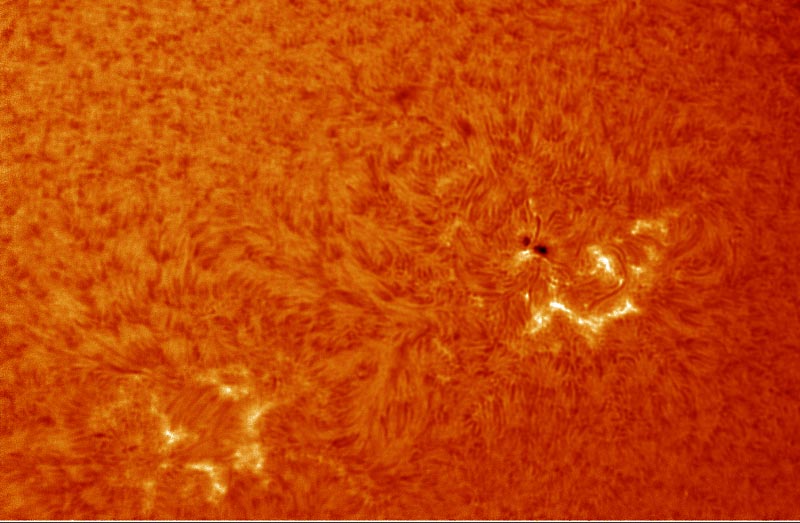
Full disc, but merged very badly since the top half and the bottom half are taken far apart, 1544 and 1551 respectively due to cloud:

Sunday, April 30, 2006
20060430 solar observation
Taken at 1640, Ranger 2x, SM40/BF10, DMK 31AF03, 876 and 875.

Full disc, ranger at prime focus:

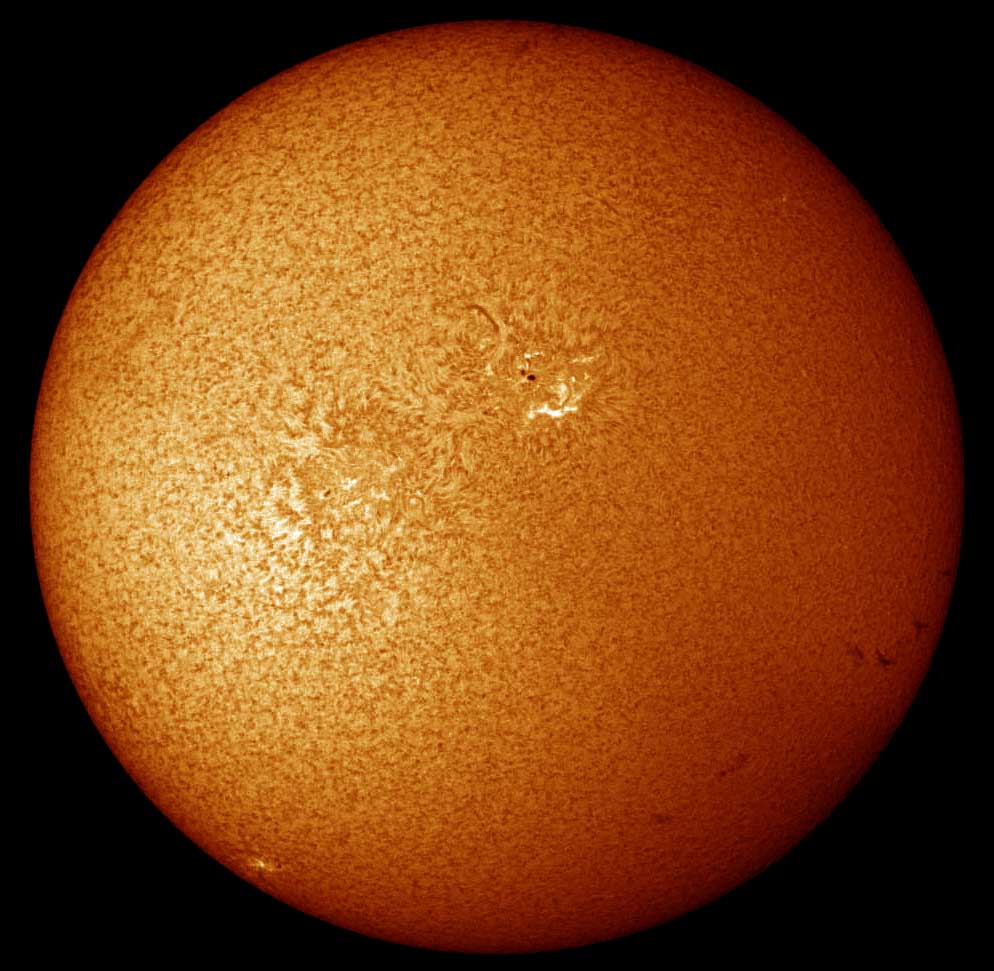
another full disc, same raw AVIs but different approach:

The raw are two AVIs, one covering the top part and another one covering the lower part.
The first one is done by stacking two AVIs separately, and then stitch them together via Photoshop, process the stitched again by registax wavelet, and fine tune again by Photoshop.
The second one is done by stacking two AVIs together, via a common alignment point and use expand image to merge all frames together according to the common alignment point, it's then wavelet processed and fine tuned by Photshop.
Seems like by using a common alignment point, more frames are stacked together effectively for a larger area, and then allow stronger processing.
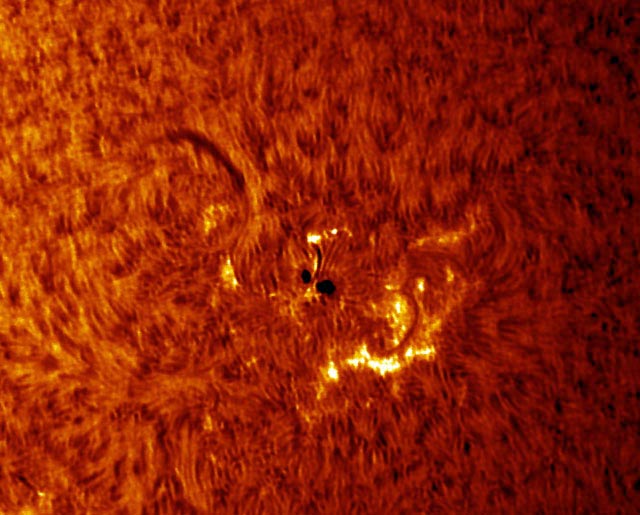
An AR875 close up, specially processed to burst contrast, may look not very natural:


Full disc, ranger at prime focus:
another full disc, same raw AVIs but different approach:

The raw are two AVIs, one covering the top part and another one covering the lower part.
The first one is done by stacking two AVIs separately, and then stitch them together via Photoshop, process the stitched again by registax wavelet, and fine tune again by Photoshop.
The second one is done by stacking two AVIs together, via a common alignment point and use expand image to merge all frames together according to the common alignment point, it's then wavelet processed and fine tuned by Photshop.
Seems like by using a common alignment point, more frames are stacked together effectively for a larger area, and then allow stronger processing.
An AR875 close up, specially processed to burst contrast, may look not very natural:
Wednesday, April 19, 2006
20060419 1454 (HKT)
Borg 45ED, 2.5x corrector at nosepiece of DMK 31AF03, non-tracked:


Add some more shots, closeup:


One more full disc taken at 1448/1449
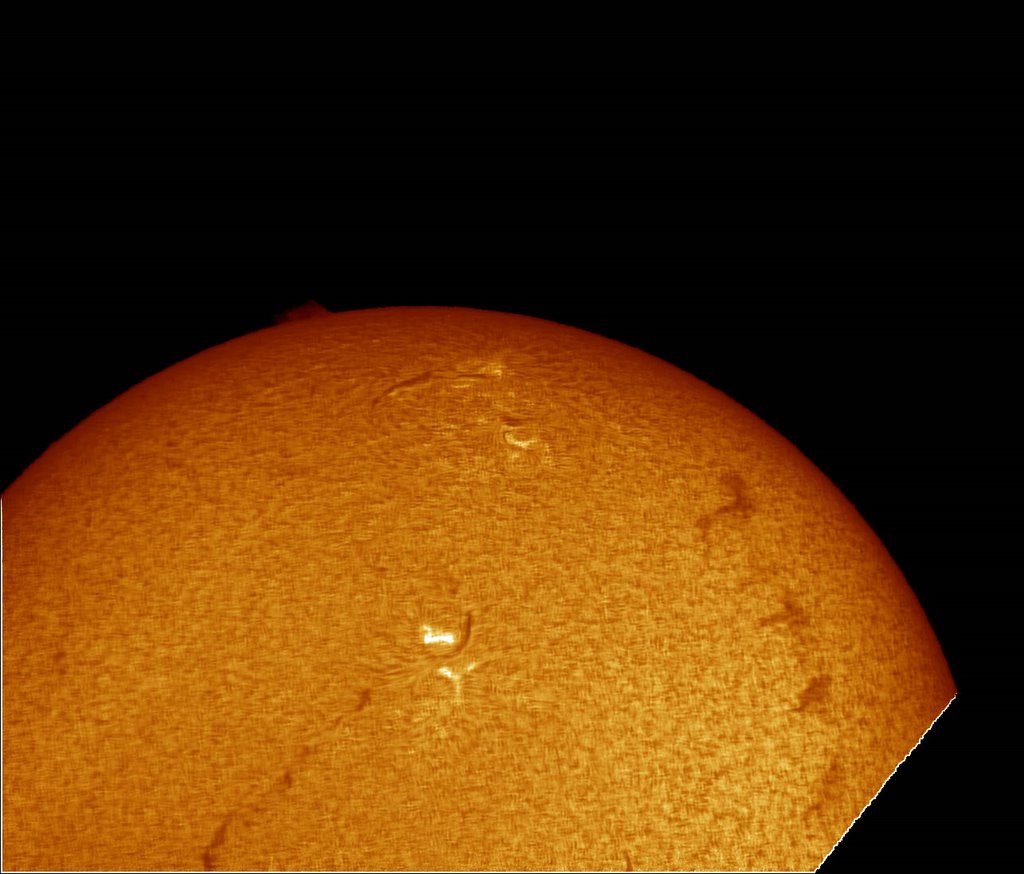
1458:


Add some more shots, closeup:

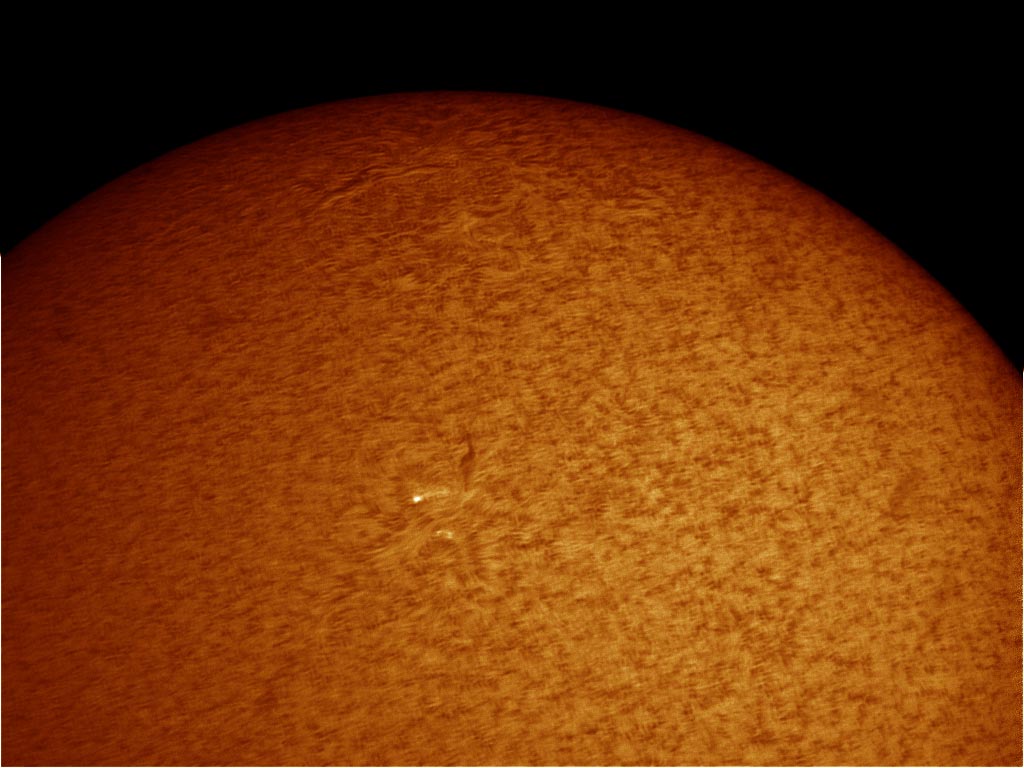
One more full disc taken at 1448/1449
1458:
Wednesday, April 12, 2006
Jupiter with C8
Around 4:15a this morning, I put my tripod on the floor instead of on the window platform, I found that I can comfortably set my C8 on the LXD55 to point to Jupiter without major blocking.
The view on the eyepiece review that the scope was slightly out of collimation, I tried to fix it but only to make it worse, I didn't do it for long... after maybe 10 minutes, I managed to fix it but the cloud was already covering... before full coverage, I managed to see it briefly on my DMK.
I hope I will have chance to get a good pic soon. Not bad to look at the eyepiece briefly, and also to re-learn collimation.
Collimation is easy as long as you don't require yourself to collimate AND to give all the screws a firm feel... I shall give it a fine tune when chance allows.
Saturday, April 08, 2006
Short solar observation
No time this morning, got a short gap this afternoon, but not enough cloud gap to capture more... just this one, prominence only, SM40/BF10, Borg 45ED, DMK:

seems like a CME is captured instead of just the tall straight prominence.

seems like a CME is captured instead of just the tall straight prominence.
First DMK Borg45ED Jupiter
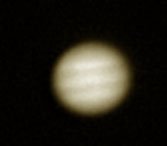
Seeing sucks... I was say it's 1/10 since it even affects 45mm aperture crazily, here's what I got, at 1/9s exposure, high gain, Borg45ED with 5x (way oversampling with small pixel size), fake color just for fun:
Wednesday, April 05, 2006
Observation today
Cloud come and go, only a few short cloud gap even I've tracked for the whole afternoon... here're the two which probably should be the best:


Ranger at prime focus for the surface detail shot, 2x barlows for the hedgerow.
A full disc shot:

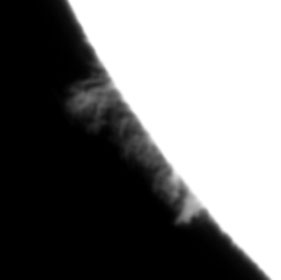

Ranger at prime focus for the surface detail shot, 2x barlows for the hedgerow.
A full disc shot:

Subscribe to:
Posts (Atom)